
Email Minister Murray Watt
Federal Minister for the Environment and Water
Email Murray Watt
Federal Environment Minister Murray Watt has the power to protect Victoria Park Barrambin under federal law. At the end of May, he rejected two Section 9 applications for short-term protection of the park. He is currently considering four Section 10 applications for long-term protection.
The Minister has quite wide discretionary powers under the Aboriginal and Torres Strait Islander Heritage Protection Act. As well as criteria such as “is the site a significant Aboriginal area" and “is it under threat of injury or desecration", he can take into account issues like whether a development is in the public interest.
Is protecting Victoria Park Barrambin from destruction by the building of not one, but two stadiums, in the public interest? It certainly is. Our grandchildren’s grandchildren would never forgive us if we let this desecration occur.
Murray Watt is a Queensland Senator, he is supposed to represent us in Canberra. All Queenslanders are his constituents, so let’s tell him what we think!
We are asking supporters to write to the Minister and urge him to permanently protect this culturally significant, heritage-listed landscape before irreversible damage occurs.
Personal letters and emails can make a powerful difference. They demonstrate the depth of community concern and remind the Minister that people across Brisbane, Queensland and Australia are counting on him to act.
Contact details
Senator the Hon Murray Watt
Federal Minister for the Environment and Water
Email BOTH addresses:
How to write your message
Please send your email to both addresses listed above.
Your message does not need to be long. A short, personal email explaining why Victoria Park Barrambin matters to you can be extremely powerful. You are welcome to draw on the suggested points below, but please use your own words wherever possible.
Remember to:
Include a clear and relevant subject line
Politely ask the Minister to permanently protect Victoria Park Barrambin
Explain why the park matters to you
Include your name and suburb or postcode
Ask the Minister to respond to your concerns
Make your message personal
The most effective letters are written in your own words. Tell the Minister why Victoria Park Barrambin matters to you, your family or your community. You may wish to describe your experiences in the park, your concerns about its loss or why you believe protecting it is in the national interest.
Please remain respectful, clear and direct. Ask Minister Watt to use the powers available to him to permanently protect Victoria Park Barrambin before irreversible damage occurs.
Suggested subject lines
Urgent Federal Action Needed to Protect Victoria Park Barrambin
Please Permanently Protect Victoria Park Barrambin
Federal Leadership Needed for Victoria Park Barrambin
Protect Barrambin’s Cultural Heritage Before It Is Too Late
Victoria Park Barrambin Is an Irreplaceable Brisbane Asset
Victoria Park Barrambin’s Future Is in Your Hands
Please Act to Protect Victoria Park Barrambin
Victoria Park Barrambin Must Be Protected in the Public Interest
Points you may wish to include
Cultural significance
Victoria Park Barrambin is a place of deep cultural significance for First Nations people. Its importance has been recognised in official heritage studies and government documents. The Indigenous Cultural Heritage Report prepared for Cross River Rail described York’s Hollow, which includes Victoria Park, as the most important Aboriginal cultural heritage site identified within the study area. The report also recognised that changes to the landscape and vegetation may have cultural significance for Aboriginal people.
First Nations Elders have sought permanent protection for Barrambin through applications to the Federal Government. This cultural heritage must be carefully considered and protected before any irreversible development occurs.
Cost and financial risk
The Brisbane 2032 Olympic bid was promoted as a sustainable Games based largely on existing facilities, responsible spending and avoiding unnecessary new stadiums. Since then, the delivery strategy has changed dramatically.
The proposed 63,000-seat stadium and 25,000-seat National Aquatic Centre at Victoria Park would be major new infrastructure projects carrying substantial financial risk. Queensland is already facing a housing crisis, rising construction costs, labour shortages and growing pressure on public finances. Committing billions of dollars to complex new projects in these circumstances is increasingly difficult to justify.
Governments should remain flexible and be prepared to reconsider decisions when circumstances change and better alternatives are available.
Difficult topography
Victoria Park’s steep and uneven terrain makes it one of Brisbane’s most challenging locations for a major stadium development. Significant excavation, earthworks and reshaping of the landscape would be required before construction could begin.
The site contains extensive areas of hard Brisbane Tuff rock, which may require blasting and specialised engineering work. It also contains natural springs and groundwater systems. These conditions add considerable cost, complexity and risk.
Unlike flatter alternative locations, Victoria Park would need to be extensively altered simply to accommodate construction. Choosing such a difficult site for one of Queensland’s largest infrastructure projects raises serious questions about value for money and long-term feasibility.
Public transport
The proposed stadium site is poorly connected to high-capacity public transport compared with Brisbane’s existing major sporting venues. Many visitors would be required to walk considerably further from public transport than they do when attending events at Suncorp Stadium or the Gabba.
The nearest railway station is Exhibition Station, which is some distance from the proposed stadium site. The route may present particular difficulties for older people, families with young children and people with disability or limited mobility.
Exhibition Station is also close to the proposed Athletes’ Village, raising further questions about security, crowd movements and transport capacity during the Olympic and Paralympic Games.
A major Olympic venue should be located where public transport access is safe, direct, efficient and accessible. Victoria Park does not meet that standard.
Royal Brisbane and Women’s Hospital
Victoria Park sits directly beside the Herston Health Precinct, which includes the Royal Brisbane and Women’s Hospital, Queensland’s largest hospital. The precinct employs more than 13,000 people and provides more than one million episodes of care each year.
Hospitals require reliable access for ambulances, patients, staff and visitors every hour of every day. The construction and operation of a major stadium next door could create ongoing disruption through traffic congestion, noise, construction activity and large crowd movements.
Any development with the potential to interfere with healthcare access or the operation of Queensland’s largest hospital must be approached with extreme caution and subjected to rigorous, independent assessment.
Traffic congestion
The roads surrounding Victoria Park are already heavily congested. The area services major institutions including the Royal Brisbane and Women’s Hospital, QUT Kelvin Grove, the University of Queensland’s Herston campus, Kelvin Grove State College and several large schools and sporting facilities.
Daily traffic volumes are already substantial due to commuters, students, patients, hospital staff, school drop-offs, deliveries and service vehicles. Adding tens of thousands of stadium patrons on event days would place enormous pressure on an already strained transport network.
Additional congestion could affect emergency vehicle movements, public transport reliability and the ability of residents, workers, patients and students to move safely and efficiently through the area.
Public green space
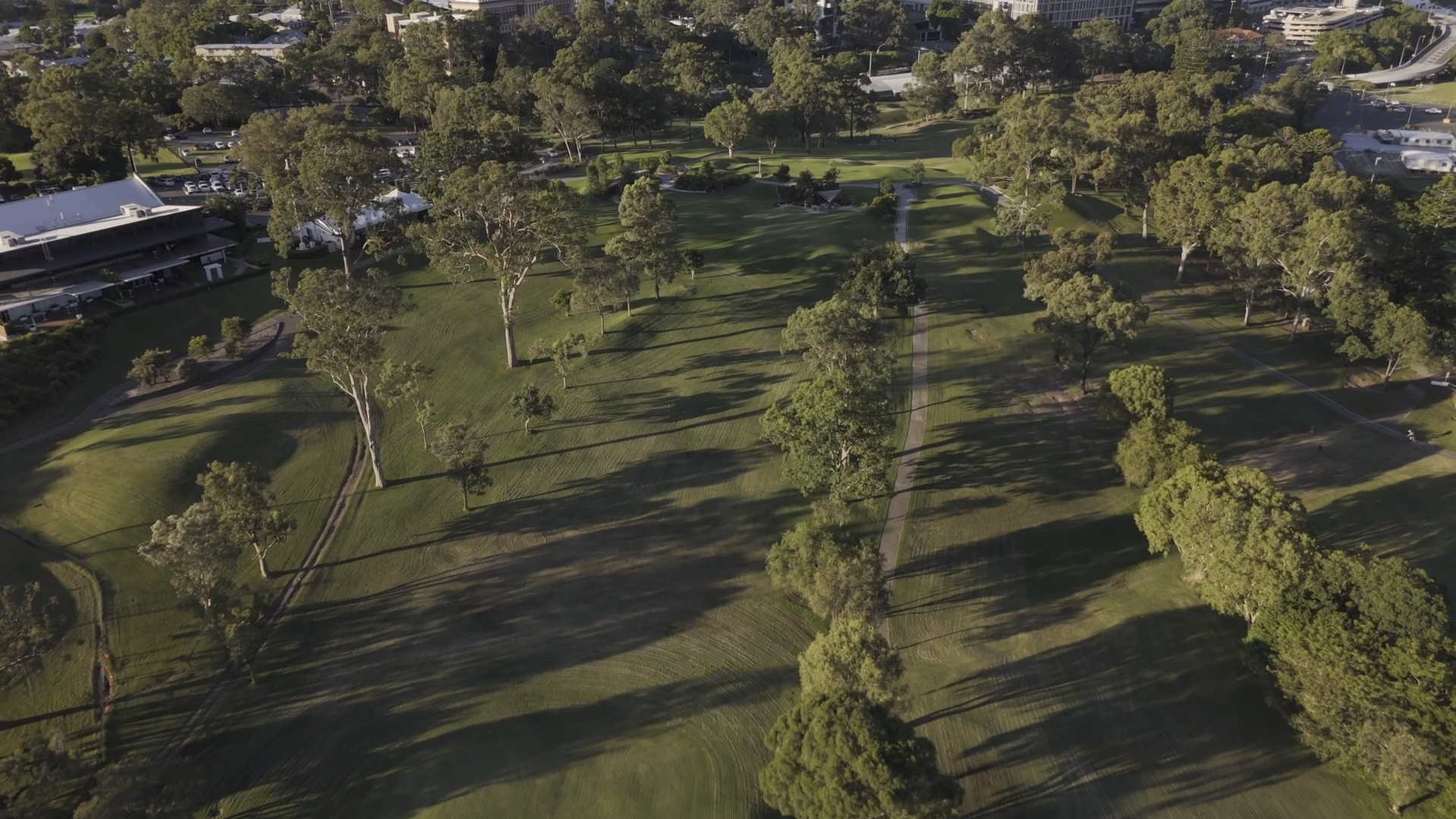
Victoria Park Barrambin is one of the largest remaining areas of freely accessible public open space close to Brisbane’s CBD. As Brisbane becomes hotter, denser and more populated, large areas of urban green space will become increasingly important.
Urban parks support physical and mental health, provide places for recreation and social connection, reduce local temperatures and help cities respond to increasingly frequent heatwaves. Once a large public green space is developed, it cannot simply be replaced elsewhere.
Protecting Victoria Park Barrambin is not only about preserving a park today. It is about ensuring that future generations retain access to the green space a growing city needs.
Ecosystems and wildlife
Victoria Park Barrambin supports a diverse urban ecosystem, providing habitat for more than 60 bird species as well as native mammals, reptiles, amphibians, insects and pollinators.
Species including Rainbow Lorikeets, Laughing Kookaburras, Sulphur-crested Cockatoos, Nankeen Kestrels and Tawny Frogmouths rely on the park’s mature trees, hollows and open spaces. These habitats also form important ecological connections within Brisbane’s increasingly developed inner city.
Large-scale construction and permanent infrastructure would remove habitat, disturb wildlife and disrupt movement across the landscape. Once mature trees, habitat hollows and established ecological systems are lost, they may take generations to recover, if they can be restored at all.
Springs and groundwater
Victoria Park Barrambin contains one of the last remaining natural spring systems in inner-city Brisbane. Independent hydrogeological investigations have confirmed that freshwater springs continue to flow beneath the park, supported by an underground groundwater system.
Most of Brisbane’s other inner-city springs have been drained, buried or diverted, making the Barrambin springs exceptionally rare. They contribute to the park’s environmental, cultural, historical and ecological significance and have likely supported people, plants and wildlife for generations.
Expert advice warns that major excavation, earthworks or infrastructure built over the springs or their catchment could permanently damage or destroy this natural system. Once lost, it cannot be recreated.