Our Reaction to GIICA & Dr Kate Quirk’s Video on Victoria Park’s Trees
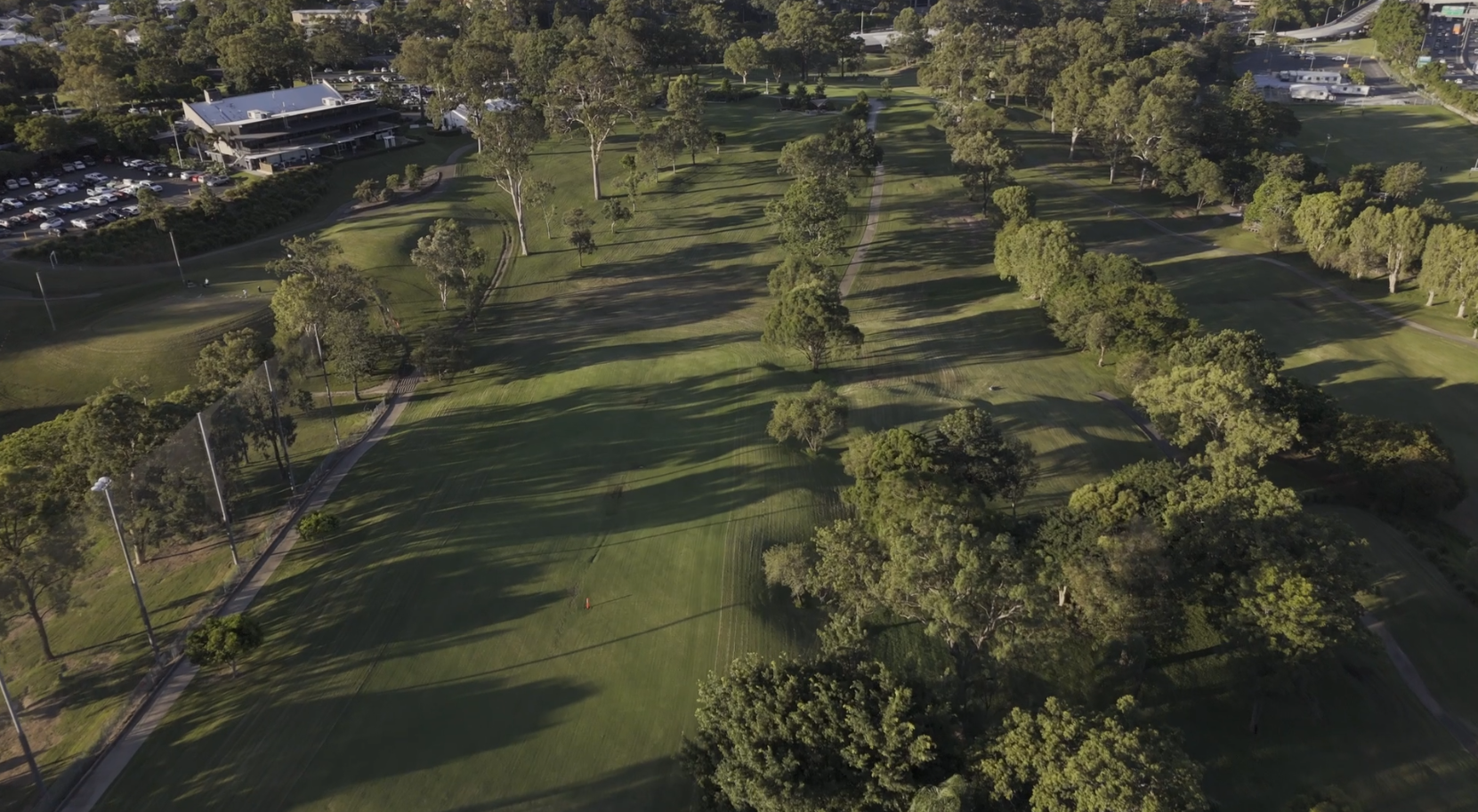
On 25 August 2026, GIICA released a video featuring Dr Kate Quirk discussing the history of vegetation at Victoria Park Barrambin. It presents a neat and convenient story: much of the park was once bare, many of its trees were planted later. Nothing to see here! GIICA’s video relies on selective photographs, broad statements and carefully chosen locations to tell a much narrower story. It’s simplistic and misleading. So, since GIICA has decided to give us a history lesson on Victoria Park Barrambin’s trees, we thought we’d fill in a few of the missing chapters. Start with GIICA’s video below and then scroll down to read our take!
1. First, About the “Tree Expert”
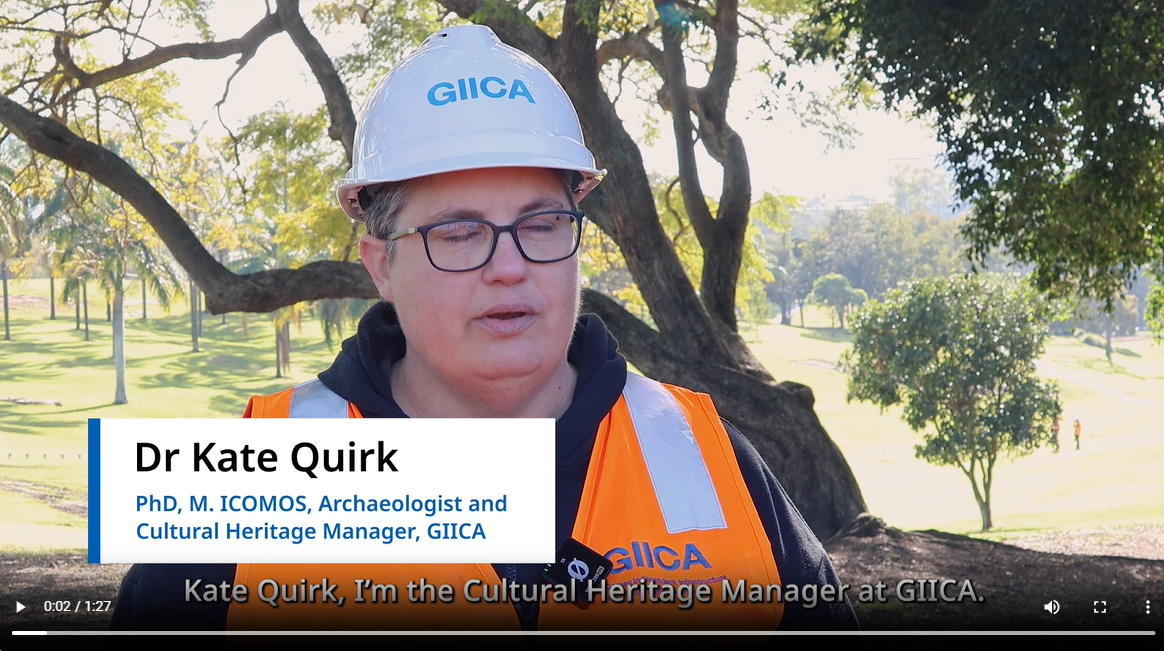
Dr Kate Quirk is an archaeologist and GIICA’s Cultural Heritage Manager. She is not an arborist. She is not an ecologist. She is not a botanist.
And, as far as we are aware, she does not hold specialist qualifications in tree assessment or tree ageing. None of that means Dr Quirk cannot speak about historical land use. Archaeology is, of course, highly relevant to understanding the history of Victoria Park Barrambin. But it does make GIICA’s choice of spokesperson rather curious.
In a video making sweeping claims about the age, origin and significance of trees, one might reasonably expect to hear from an arborist, ecologist or other suitably qualified vegetation expert. Apparently not.
GIICA has instead put forward its Cultural Heritage Manager to explain why many of the mature trees standing in the way of its stadium plans are not as old or significant as people might think. Convenient.
2. Ages of Trees in the Stadium “Bowl”
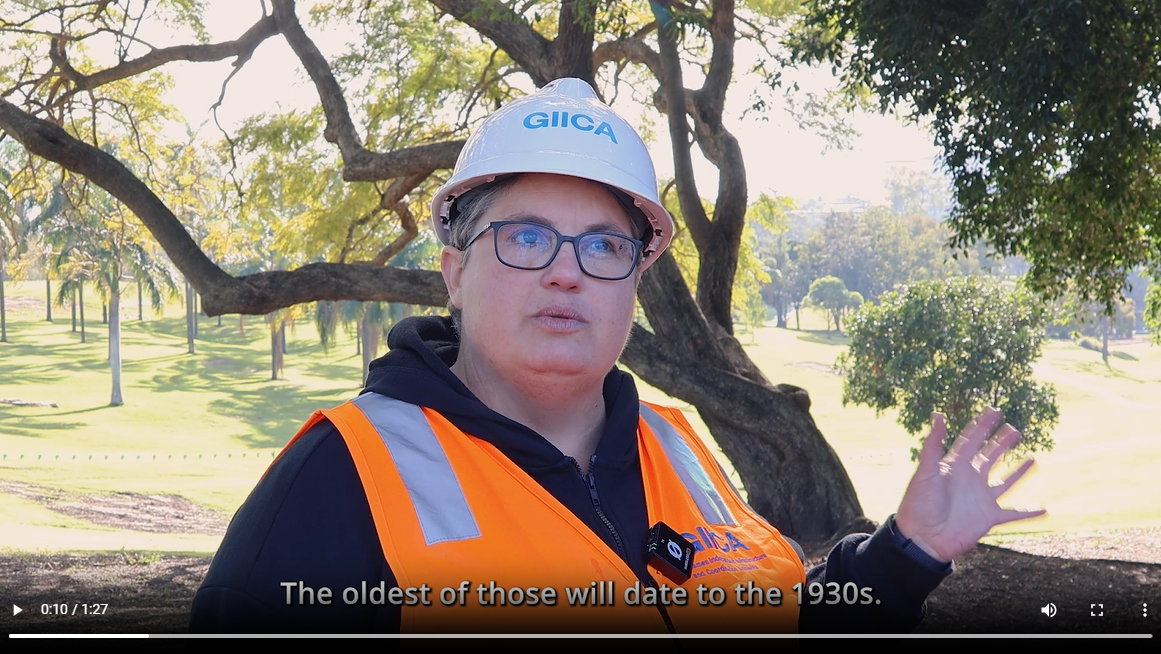
Standing above what GIICA calls the stadium “bowl”, Dr Quirk says:
“Behind me we have the stadium bowl. You can see there’s quite a lot of plantings in there. The oldest of those will date to the 1930s.”
Some trees in this area were deliberately planted, including historically significant formal plantings associated with the former golf course landscape. Much of these historic plantings were completed by Harry Moore (the city's first Parks Superintendent) and Harry Oakman (one of Australia's foremost gardening authorities and a pioneer of Australian architectural landscaping). These are historic, heritage-listed plantings in of themselves.
Trees planted in the 1930s are now approaching 100 years old. They are mature habitat trees, carbon stores and part of Brisbane’s historic landscape.
Further, GIICA’s stadium works are NOT just confined to the “bowl” Dr Quirk is gesturing towards. The actual area affected by the stadium project extends well beyond it, incorporating the stadium footprint, construction areas, access routes and associated infrastructure. And within that broader impact area are trees that pre-date the 1930s by rather more than a few decades. Historic maps identify ironbark, forest oak and spotted gum, while later studies also record gums, bloodwood and stringybark (Ray Kerkhove, 2019).
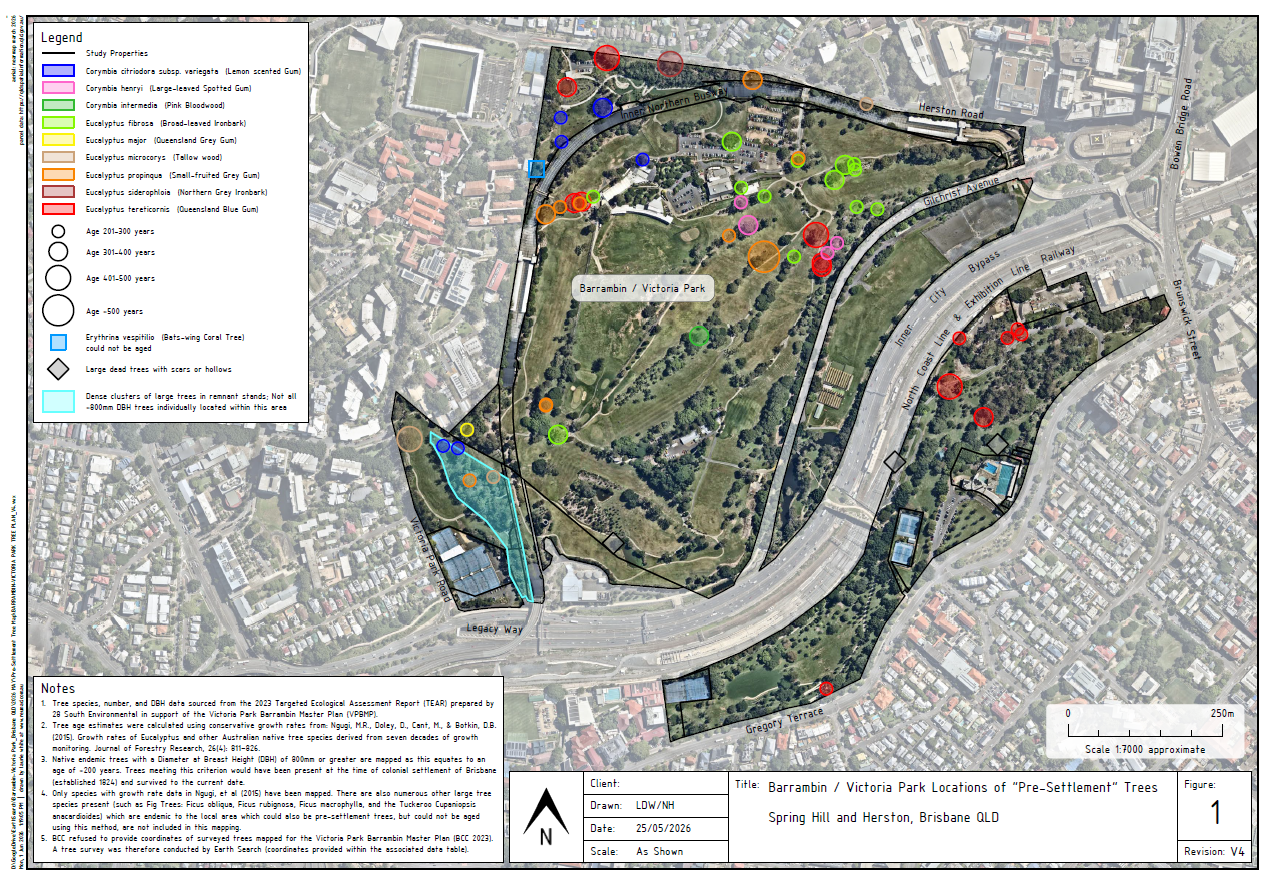
Of the 57 pre-settlement trees in the park (trees over 200+ years old which have not been planted), we estimate at least 50 are within the stadium impact area. This includes 10 pre-settlement trees which have already been bulldozed.
GIICA takes the fact that some trees were planted in the park and stretches it into a much more misleading narrative: none of the trees are that old, not that significant and the landscape has changed before. That is not the full history of Victoria Park Barrambin. It is a very selective version of it.
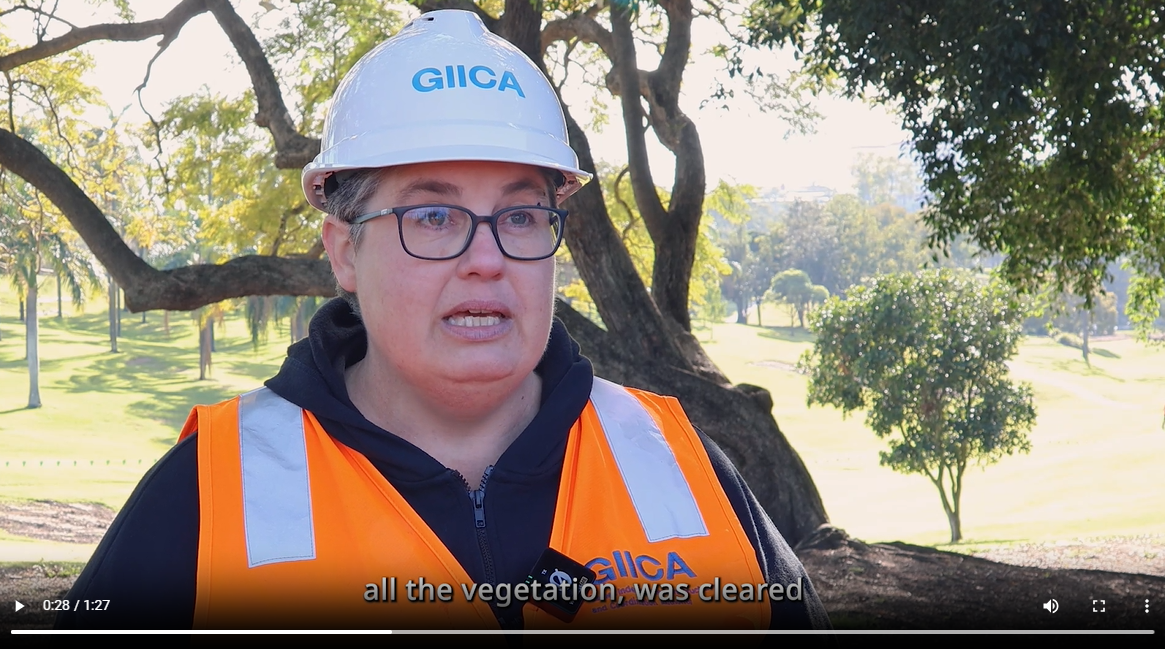
3. All of the Vegetation was Cleared?!
Dr Quirk says:
“A lot of the vegetation or all of the vegetation was cleared.” We’ll explore this in more detail below in section 4. But this is factually incorrect as can be seen in the 1936 aerial photographs of the whole park below.
4. “This Entire Area Was Empty”
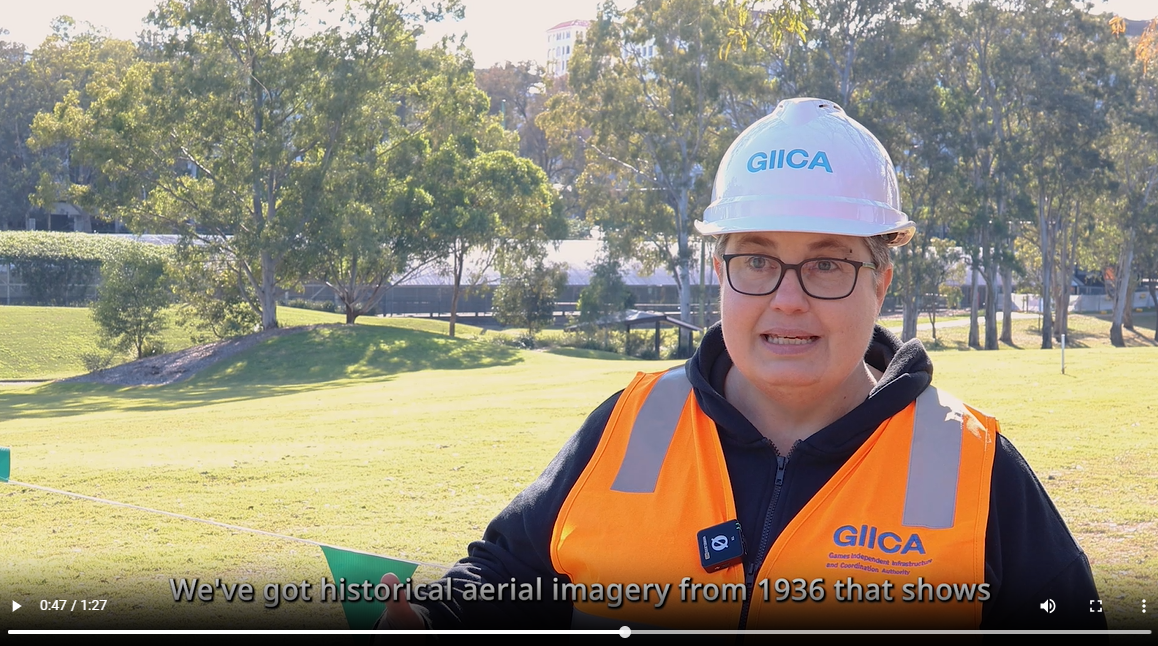
For this part of the video, Dr Quirk has moved to Gumtree Grove, near the Herston busway and RBWH, well away from the proposed stadium “bowl”.
She says:
“We’ve got historical aerial imagery from 1936 that shows this entire area was empty behind me.”
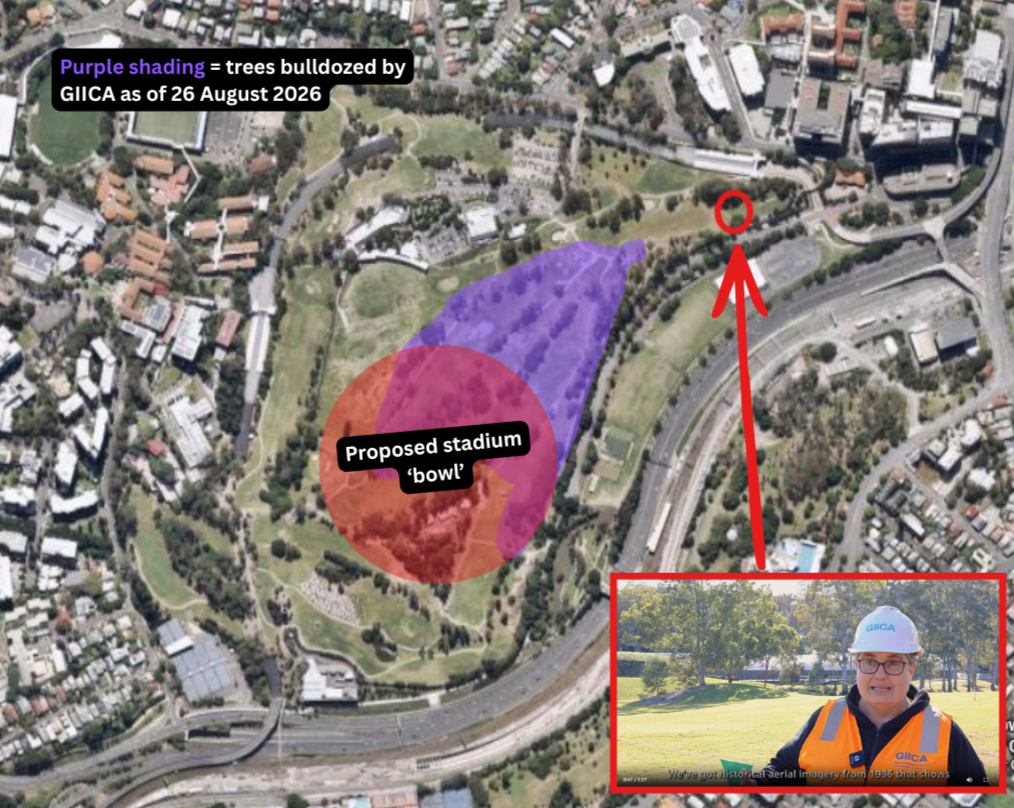
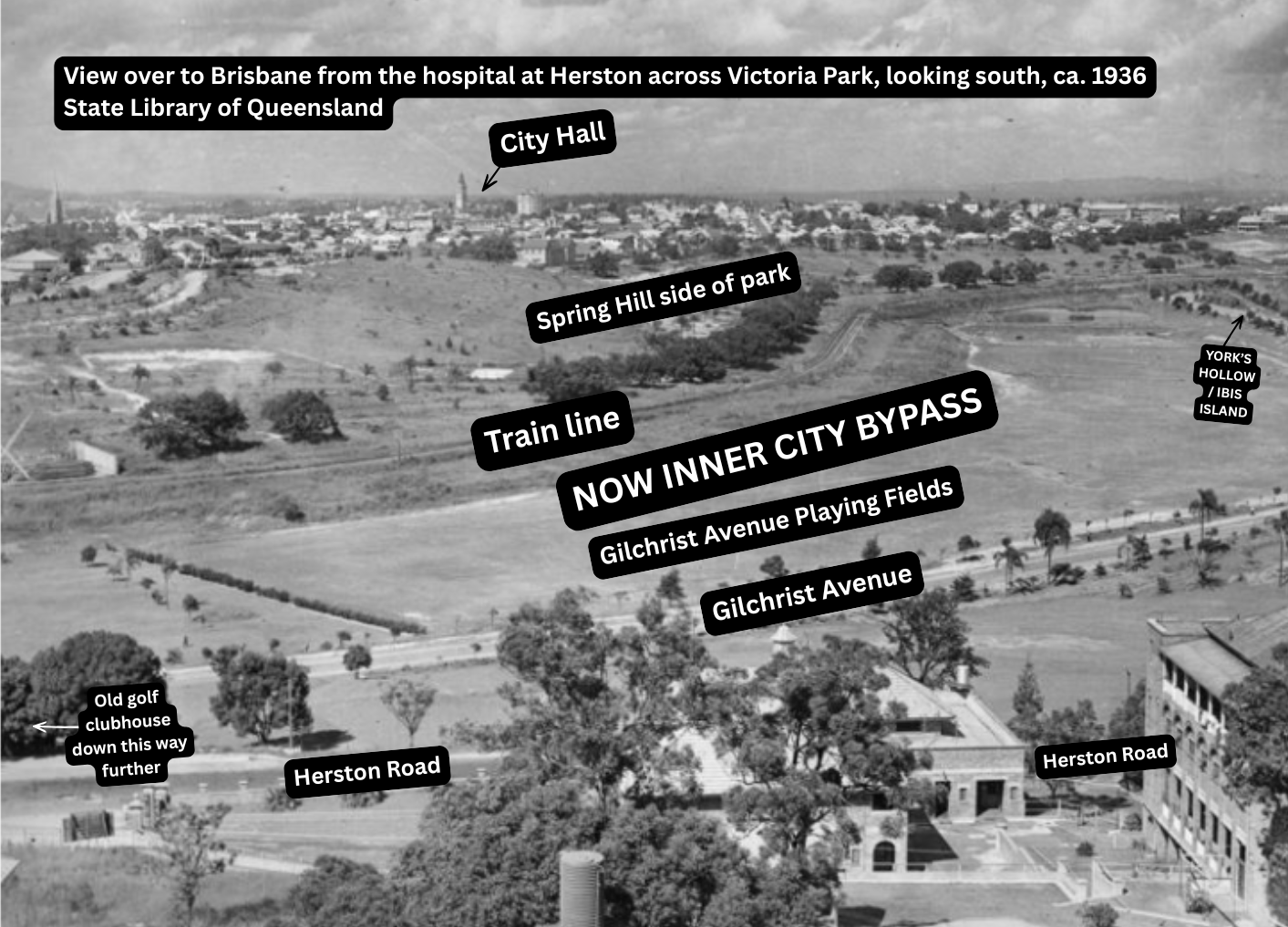
The aerial image Dr Quirk refers to does show a small part of the park near to where she is standing and yes, it is an area with not many trees. Dr Quirk does not show the main body of Victoria Park Barrambin, the proposed stadium site or the area where GIICA has been predominantly clearing heritage and pre-settlement trees. These areas contained many more trees. That distinction matters.
Combined with the sweeping claim that “this entire area was empty”, the image leaves viewers with the impression that Victoria Park was largely treeless before twentieth-century planting. It wasn’t. We’ve added location markers to help orient yourself with Dr Quirk’s aerial photograph.
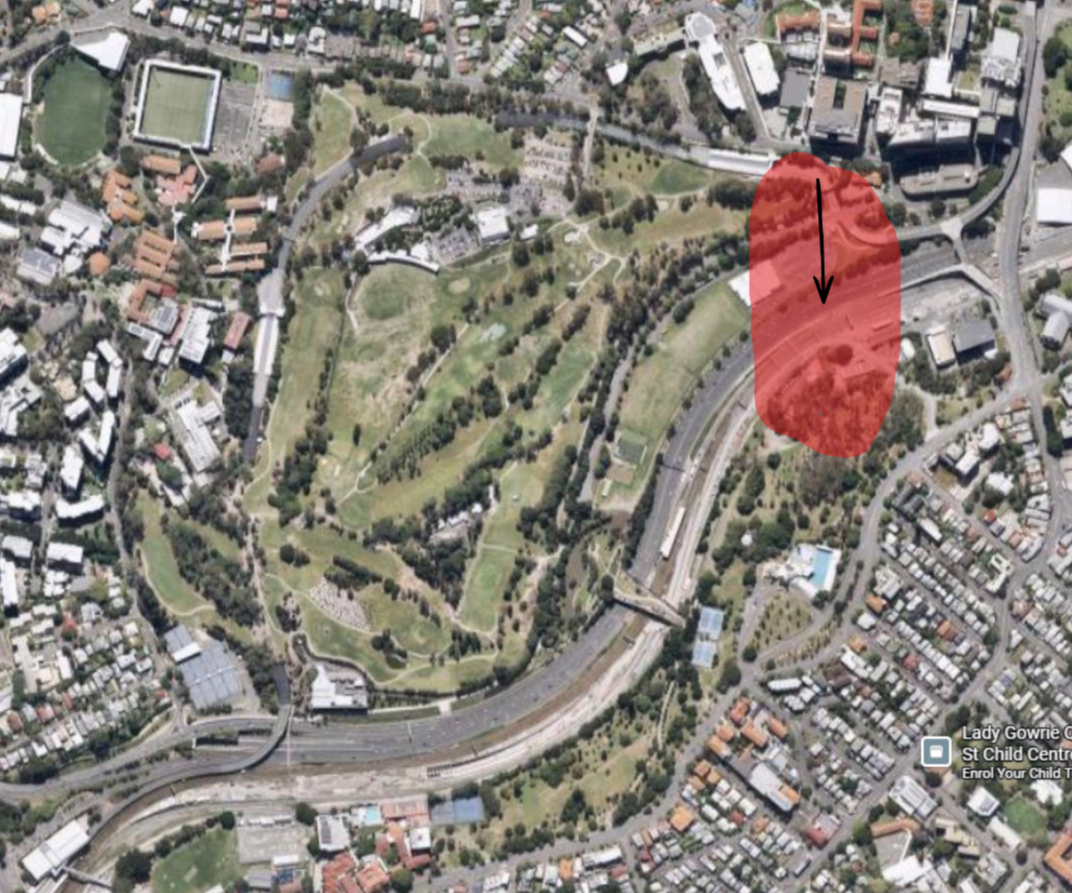
Now let’s look at what angle this aerial image depicts. The map below roughly shows the view point from the aerial image (arrow the shows direction that the photograph is taken). The aerial photo does not show the main area of the park OR the proposed stadium site.
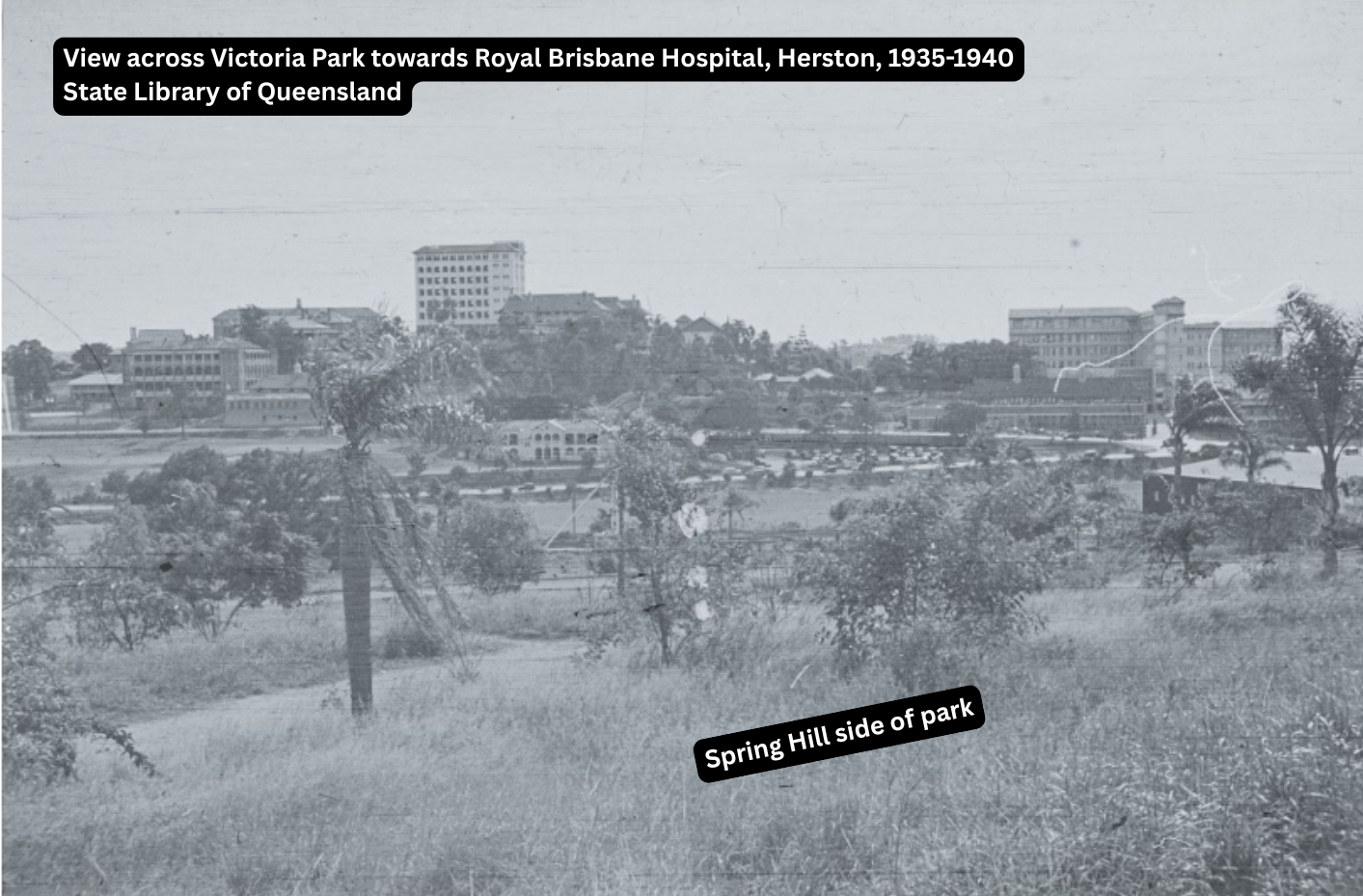
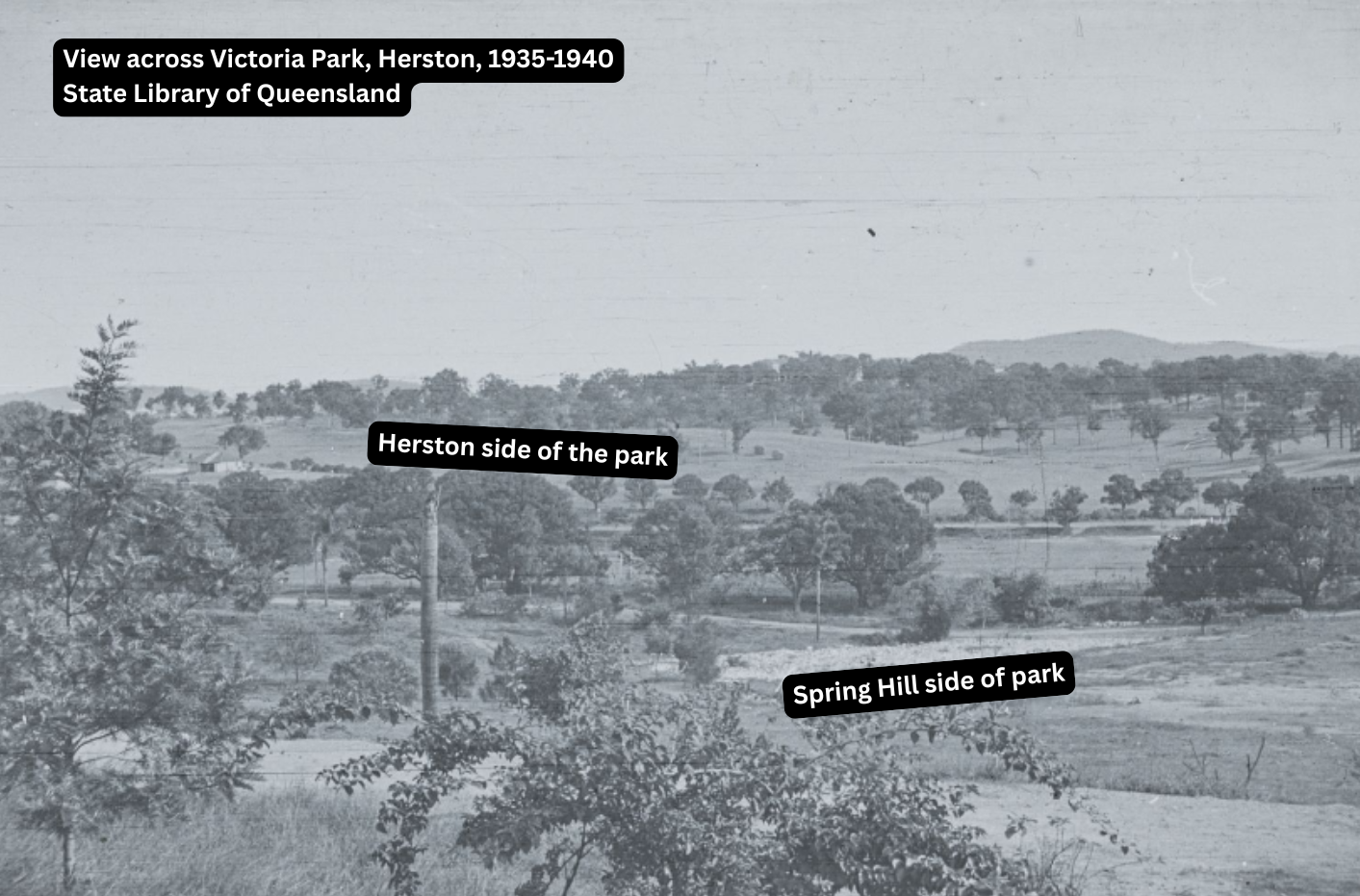
Now let’s look at some other historic photographs of Victoria Park from the same period. Suddenly, when the camera angle changes, there are a lot more trees.
What is particularly interesting is that both the photographs below and the image used by Dr Quirk are publicly available through the State Library archive. If GIICA and/or Dr Quirk found the photograph that makes the park appear largely bare, it could also have found the photographs showing substantial vegetation elsewhere across the park.
Choosing one image is not the same as telling the whole story. Unless you know the park well, you would have no reason to realise that this photograph shows only one very small, selectively framed section. Presented without that context, it creates a deeply misleading picture of what Victoria Park Barrambin looked like at the time.
Now let’s look at further evidence that the pre-settlement flora existed as mature trees during the 1930s (contradictory to Dr Quirk’s claims). The map below shows the pre-settlement trees of Victoria Park (200+ years old). The coloured circles designate these ancient trees. Note that 10 of these have already been razed to the ground by The State Government, GIICA and BMD.
“I would propose that any gum tree (ie Eucalyptus, Corymbia (Blakella)) with a current diameter of 120cm or greater was present on the site as an established sapling at Settlement in 1825.” - Dr Gary Bacon, Botanist
Now let’s map the same pre-settlement trees on 1936 aerial photography of Victoria Park Barrambin – Western Herston portion (image 1) and Eastern Spring Hill portion (image 2). Source: QImagery, 2026
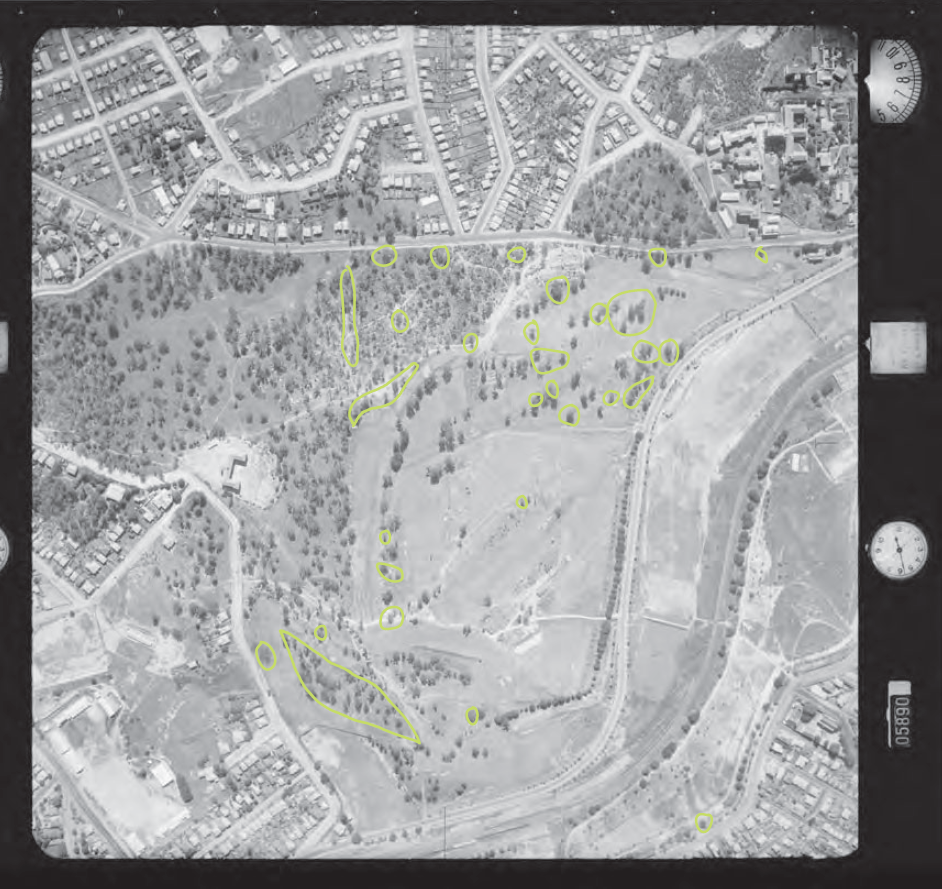
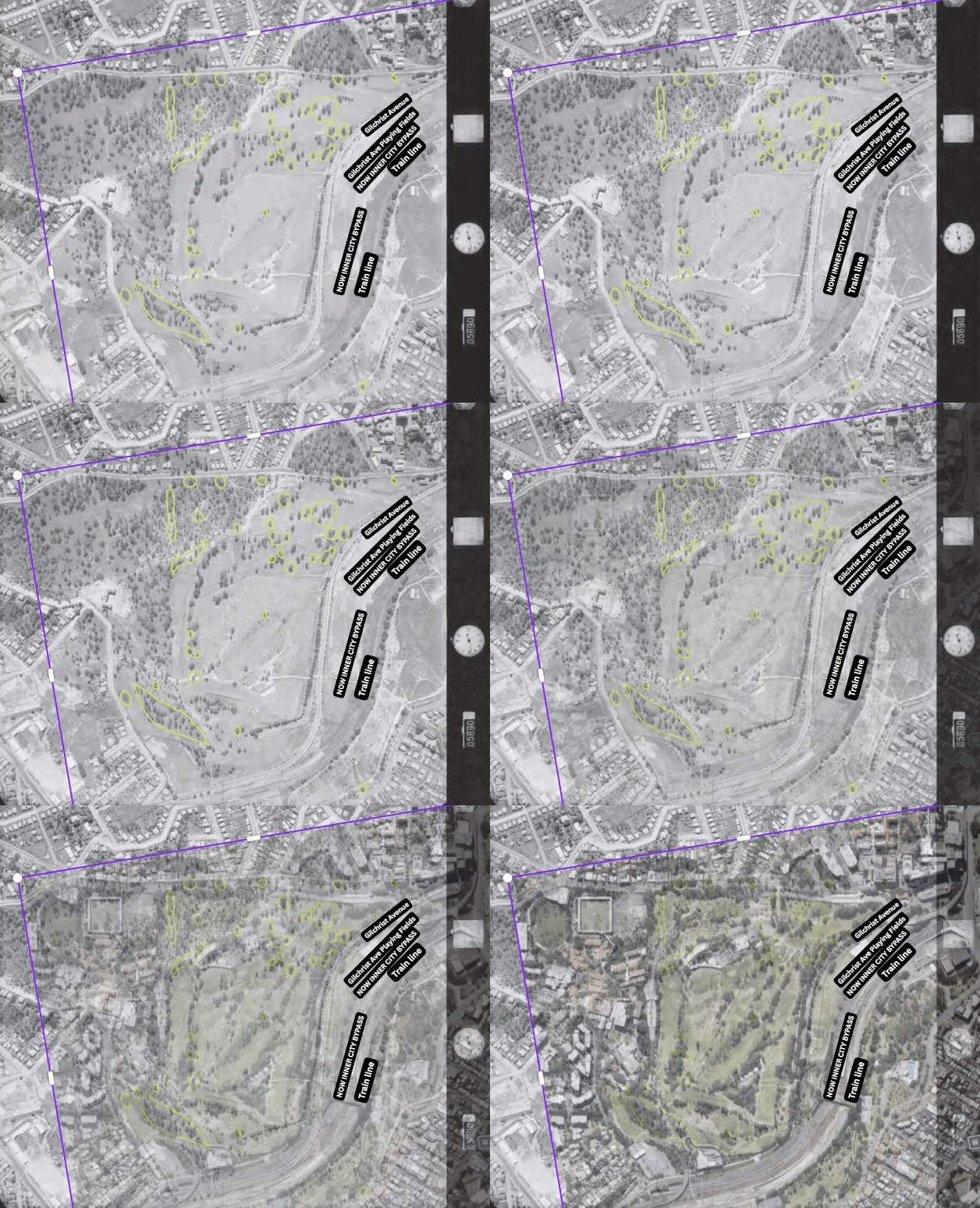
Aerial photo above taken in 1936. Second photo shows the same aerial with a current map overlayed on top.
5. And finally, a little irony
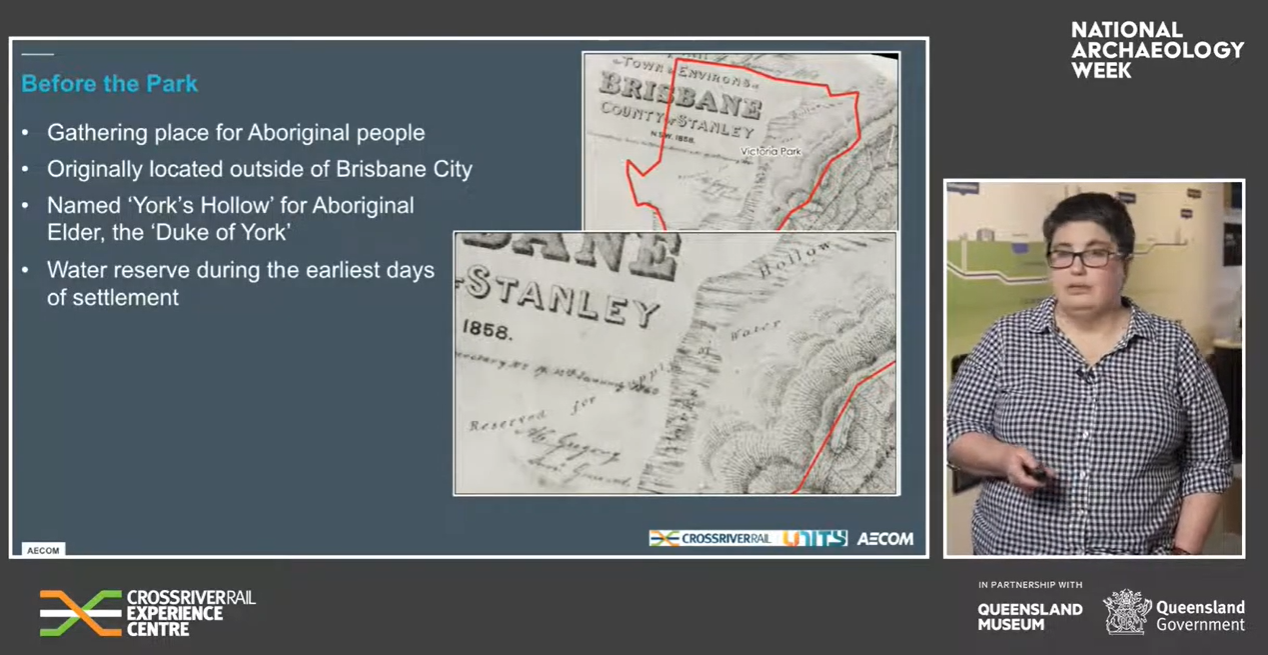
Perhaps the most interesting part of all this is that we have quoted Dr Quirk elsewhere on this very website. In 2021, while working as a cultural heritage specialist for the Cross River Rail, she said in a Youtube video of Victoria Park:
“Victoria Park is listed on the Queensland State Heritage Register as a place of state significance... because it’s been a park for a long time [and] because there are some components of the park that really aren’t found anywhere else.”
Back then, the rarity and heritage value of Victoria Park were apparently worth highlighting. Now, in a GIICA video, the emphasis is rather different: the trees were planted, the landscape was cleared, the mature vegetation is mostly mid-century. Same park. Same heritage specialist. Rather different emphasis.
In the same Youtube video, Dr Quirk detailed some of the First Nations history and significance of the park. It is telling now that her latest video for GIICA conveniently avoids any mention of this cultural heritage.
Source: Youtube
Summary
GIICA’s video presents a neat and convenient story: Victoria Park Barrambin was largely cleared, many of its trees were planted later and the mature trees standing there today are therefore somehow less significant. But the real history is far more complex. The park contains twentieth-century plantings, regenerated vegetation and surviving pre-settlement trees more than 200 years old. Selective photographs, vague wording and carefully chosen locations do not erase that. If GIICA wants to tell the story of Victoria Park’s vegetation, it should tell the whole story, not just the parts that make bulldozing it easier to explain.