
The National Aquatic Centre and Precinct: The Olympic Venue Nobody Was Asking For
How Brisbane ended up with the most controversial swimming venue of the Games
When people think about the Brisbane 2032 Olympic controversy, they usually think about the proposed main stadium at Victoria Park Barrambin.
But on the opposite side of the park sits another project that deserves just as much scrutiny.
The proposed National Aquatic Centre (NAC) would replace the Centenary Pool complex on the Spring Hill side of Victoria Park Barrambin with a new Olympic swimming venue and aquatic precinct.
Unlike the proposed main stadium, however, this site wasn't even the preferred option recommended by the Games Independent Infrastructure and Coordination Authority (GIICA). And you know there’s a problem when a board stacked with individuals from the property development sector don’t think it’s a good idea!
There are many reasons why this site doesn’t work and we are yet to hear any convincing arguments as to why this venue should be built on the Spring Hill side of Victoria Park.
So are there better alternatives?
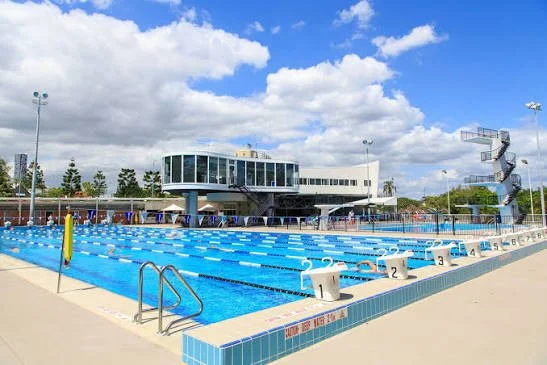
Photo: Brisbane City Council
GIICA Originally Recommended Chandler
One of the biggest misconceptions surrounding the National Aquatic Centre is that it was always intended to be built at Victoria Park. It wasn't.
GIICA’s own 100-Day Review concluded that the proposed Spring Hill site at Victoria Park was “not fit-for-purpose” citing topographical constraints, independent cost assessments considerably higher than the original proposal, insufficient flat, accessible space for the necessary Games overlay, unresolved access and transport issues, security vulnerabilities from the site’s proximity to the adjacent railway line and Inner-City Bypass, and major utility relocation, including a 33kV power transmission line.*
*Source: https://giica.au/uploads/documents/100%20Day%20Review%20Report%20-%208%20March%202025%20APPROVED.pdf, Section 5.10)
Instead, GIICA recommended that Olympic swimming be held at the Chandler Sports Precinct.
Under GIICA’s proposal for Chandler -
A new High Performance Aquatic Centre at Chandler would host Olympic swimming
The existing Brisbane Aquatic Centre at Chandler would also be upgraded
The venue would operate with a temporary Olympic capacity before reducing to a legacy capacity after the Games.
GIICA estimated the additional cost of this option at around $300 million.
Notably, this option did NOT involve demolishing heritage-listed buildings, relocating major electricity infrastructure or permanently transforming one of Brisbane's oldest public swimming facilities.
Instead, Chandler was ultimately discarded by the State Government in favour of a far more complicated Victoria Park site. This is a risky decision which doesn’t make sense, taking more time to build, destroying a heritage building and site and costing the public significantly more money.
Why the Centenary Pool Site is So Problematic
1. A heritage-listed site
The proposed National Aquatic Centre would occupy one of Brisbane's most historically significant recreation precincts.
Centenary Pool was designed by renowned Brisbane architect James Birrell as part of Brisbane's Centenary celebrations.
The complex is recognised for its architectural significance and forms part of an important heritage landscape.
Immediately adjacent sits Gundoo Memorial Grove - a place where in 1959 the community and school students planted 1,000 native trees in recognition of the site’s First Nations’ history.
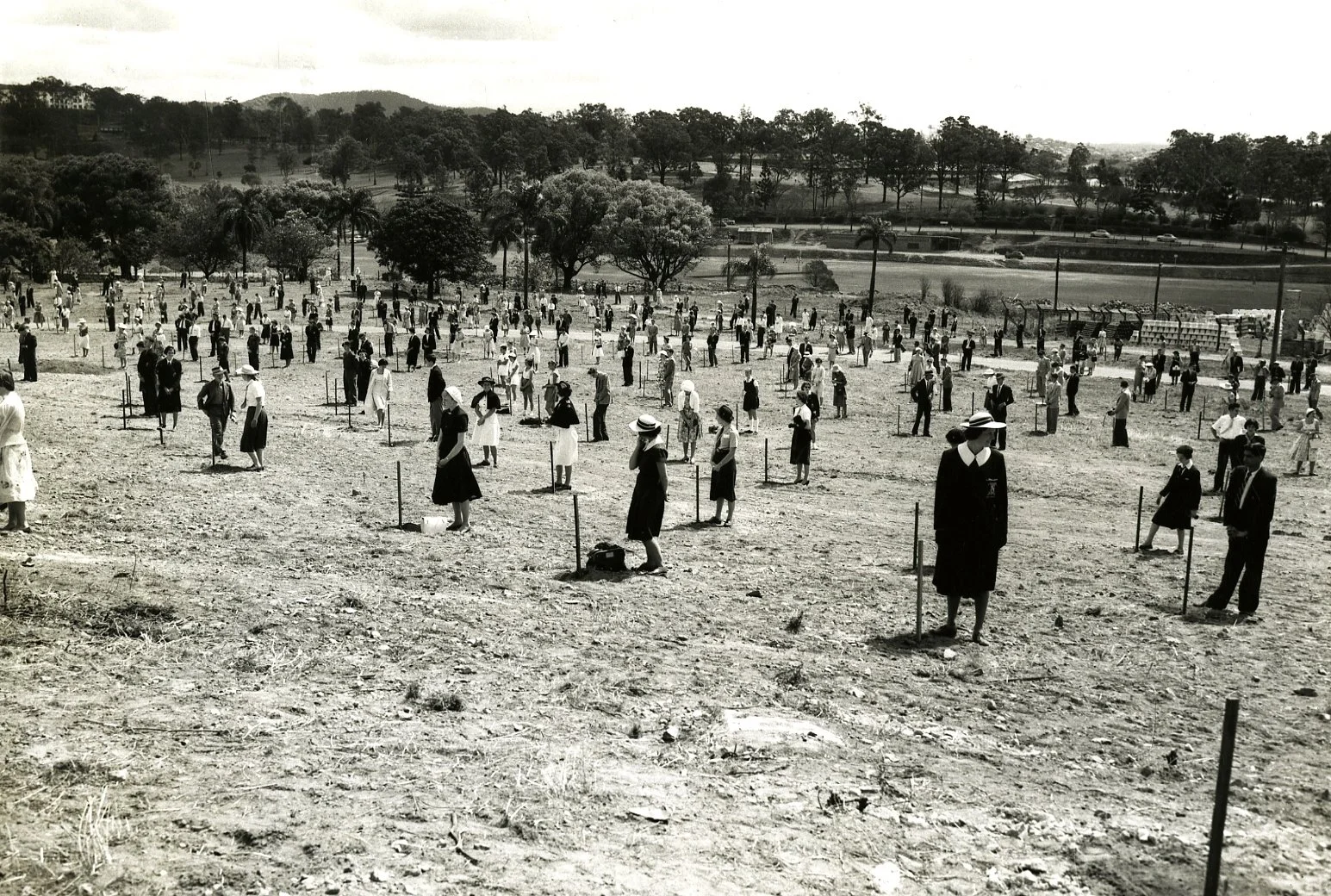
Photo: Students planting 1,000 trees at Gundoo Memorial Grove in 1959, Brisbane City Archives
Unlike many Olympic venues, this is not an empty parcel of land awaiting development. It is already a significant public place with decades of social history.
2. A place of profound Aboriginal cultural significance
Long before Centenary Pool existed, this area formed part of Barrambin.
Historical records identify the broader site as:
Brisbane's oldest continually used Aboriginal homeland settlement
An important gathering place
A birthing place
A burial place
The location of two violent colonial raids that resulted in Aboriginal deaths.
This cultural significance extends well beyond the proposed main stadium site. The Spring Hill side of the park carries its own deep Aboriginal history.
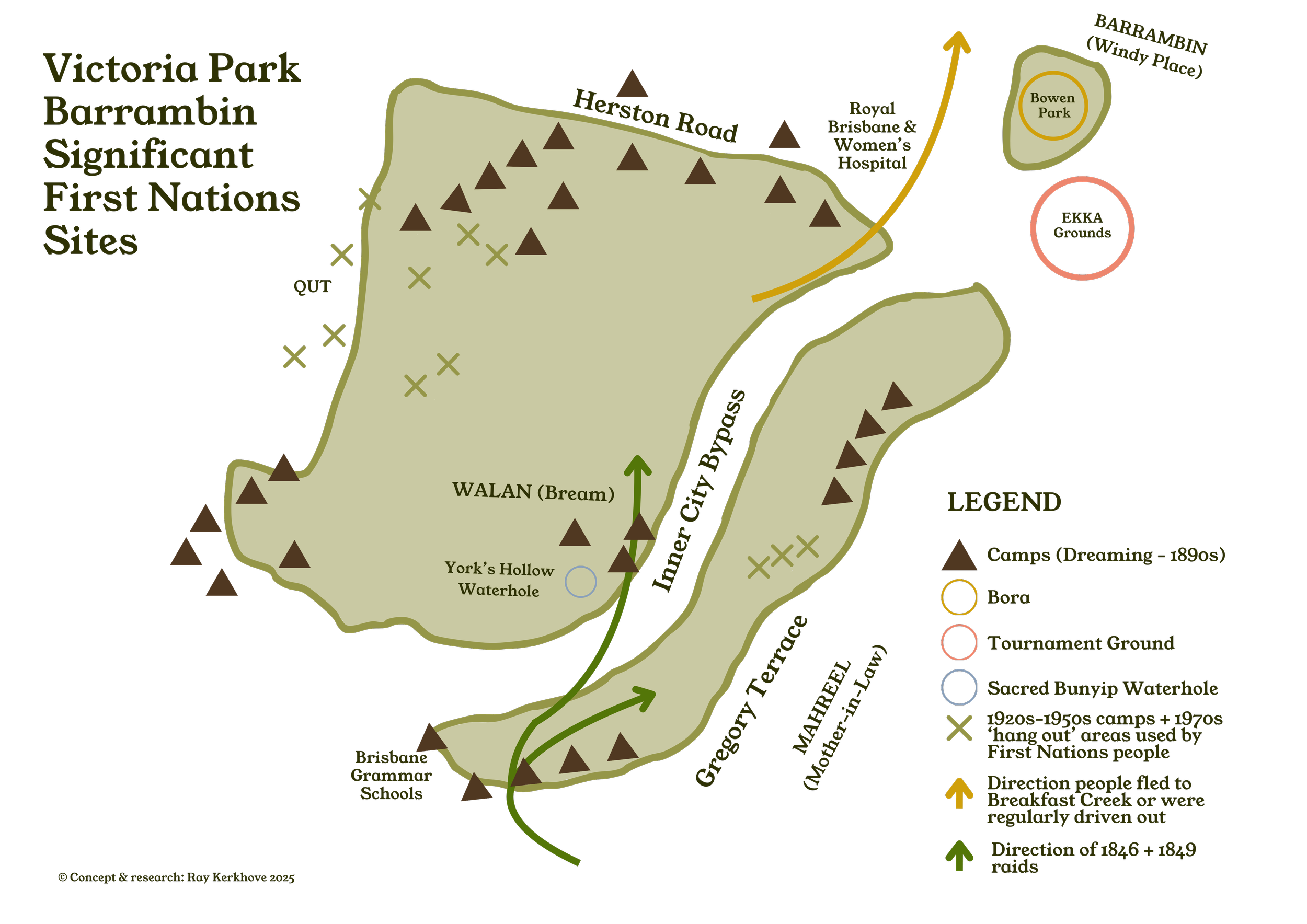
Photo: Professor Ray Kerkhove
3. Easements & critical 33kV electricity cables
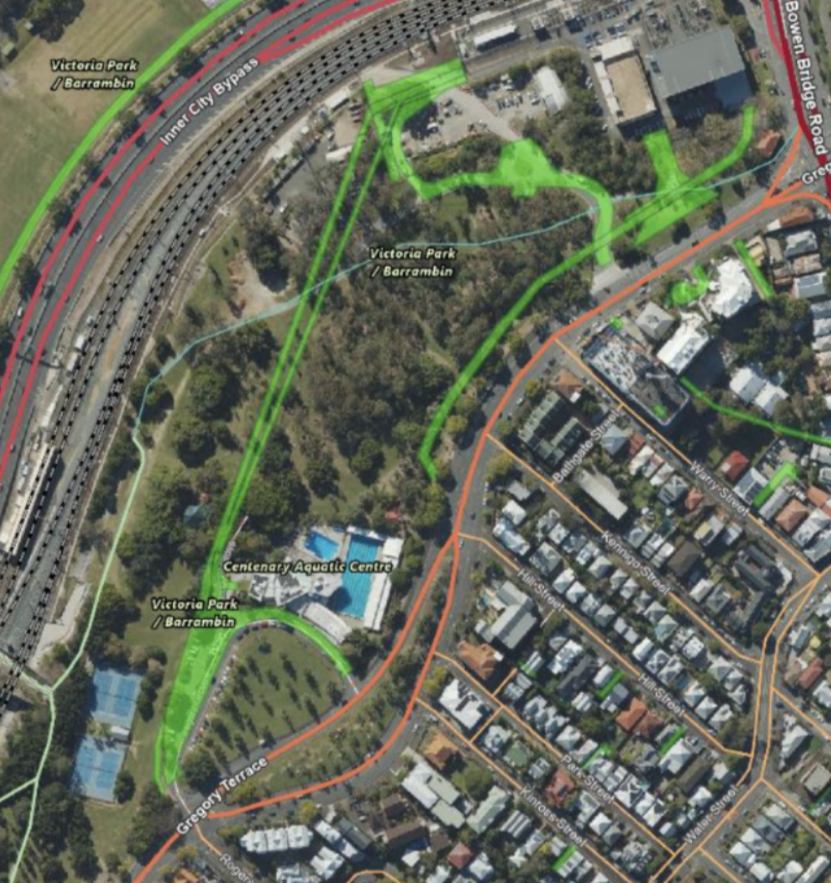
Perhaps the least discussed challenge facing the proposed National Aquatic Centre lies beneath the site. The precinct is burdened by multiple preserved utility easements, including major Energex electricity easements carrying 33kV cables that supply power to large parts of Brisbane's CBD, as well as Brisbane City Council infrastructure easements. Under the Olympic legislation, these easements remain in place, meaning GIICA must either design and build around them or undertake complex and costly relocation works.
The challenge is compounded by the site's steep topography. Constructing the NAC would require extensive excavation, major earthworks and potentially bedrock blasting while ensuring this critical underground infrastructure is protected.
Relocating the 33kV cables alone is expected to -
Take around 18 months
Cost many millions of dollars
Introduce significant engineering complexity
Create another potential source of project delay
Unlike many Olympic venues around the world, the Spring Hill site cannot simply be cleared and built upon. It contains critical underground infrastructure that adds considerable cost, risk and construction complexity before the main venue can even be built.
4. Costs have already doubled before anything has begun
The National Aquatic Centre at the Centenary Pool site in Victoria Park was estimated to cost $650 million. However the estimated cost has now reportedly surged to over $1.2 billion. This new cost “now positions the aquatic venue as the second-most expensive project in the city’s Olympic infrastructure pipeline, behind only the $3.8 billion Victoria Park stadium.” (Australian Leisure Management).
The escalating costs have already forced a redesign. In May 2026, Deputy Premier Jarrod Bleijie confirmed that the initial plans had been sent back after exceeding the project's budget (Sydney Morning Herald).
5. Losing one of Brisbane's busiest public pools
Centenary Pool is much more than an Olympic venue. It is one of Brisbane's most heavily used community pools. In 2019, it was reported that 400,000 people use Centenary Pool each year*, a number which has undoubtedly increased over the past seven years. Its closure affects rehabilitation patients, schools, families, patrons of Rackley’s swim school, older residents who use the pool as a form of community and people who rely on swimming for physical and mental health.
The timing is particularly concerning as QUT has also announced the closure of its own pool at Kelvin Grove.
Fortitude Valley Pool already operates near capacity and is heavily used for school programs and elite training.
This leaves inner Brisbane with significantly reduced public aquatic access.
6. Businesses forced to relocate
The redevelopment also affects businesses that have operated successfully within the precinct for decades.
One example is orthodontist Dr Nick Kotsomitis, whose practice has been located at Centenary Pool for around 30 years. Despite having an established practice, relocation is expected to cost around $1 million, with reports indicating little or no compensation.
These impacts rarely feature in Olympic announcements but have significant consequences for local businesses and their patients.

Photo: University of Queensland photo of Dr Nick Kotsomitis
7. Constrained access and transport logistics
The proposed National Aquatic Centre is located on a highly constrained inner-city site with limited road access. International Olympic Committee technical standards require separate vehicle access routes for athletes, media and spectators to ensure safe and efficient operations during the Games. It is unclear how the Spring Hill site could accommodate these requirements without placing significant pressure on surrounding roads such as Bowen Bridge Road and Gregory Terrace, which already experience heavy traffic. Meeting these access requirements could require substantial road modifications while increasing congestion, creating logistical challenges and potentially affecting safety around one of Brisbane's busiest transport corridors.
8. Is this really the best long-term location?
The State Government and Swimming Australia have never explained why a new swimming venue is required and why such a venue must be located in the inner city.
During the Olympics, most spectators will arrive by public transport. After the Games, they won't. Swimming carnivals, school championships and national meets rely heavily on families driving. Unlike Chandler, Centenary Pool has very limited parking.
The surrounding road network is already heavily constrained by nearby hospitals, schools and dense residential development.
Chandler, by comparison, already functions as Queensland's major aquatic sporting precinct and includes extensive parking designed to support large-scale events.
This raises an important question: is this being designed as a lasting community venue or simply an Olympic venue?
There are Better Alternatives
The debate is often framed as a choice between building the National Aquatic Centre or not hosting Olympic swimming. That is a false choice. There are multiple credible alternatives.
Option 1: A temporary drop-in pool
Many recent Olympic Games have moved away from constructing permanent swimming venues. Instead, organisers build temporary "drop-in" pools inside existing stadiums. Los Angeles 2028 will use this approach.
The advantages are significant -
Dramatically lower construction costs
Avoids building venues that may later be underused
Eliminates permanent impacts on heritage sites
Larger spectator capacity if installed in a major stadium such as Suncorp Stadium
Greater ticket revenue (LA 2028 swimming will be held in a drop in pool at SoFi stadium with a record breaking seating capacity of 38,000)*
Rather than constructing an entirely new aquatic complex, Brisbane could follow the model increasingly adopted by modern Olympic hosts.
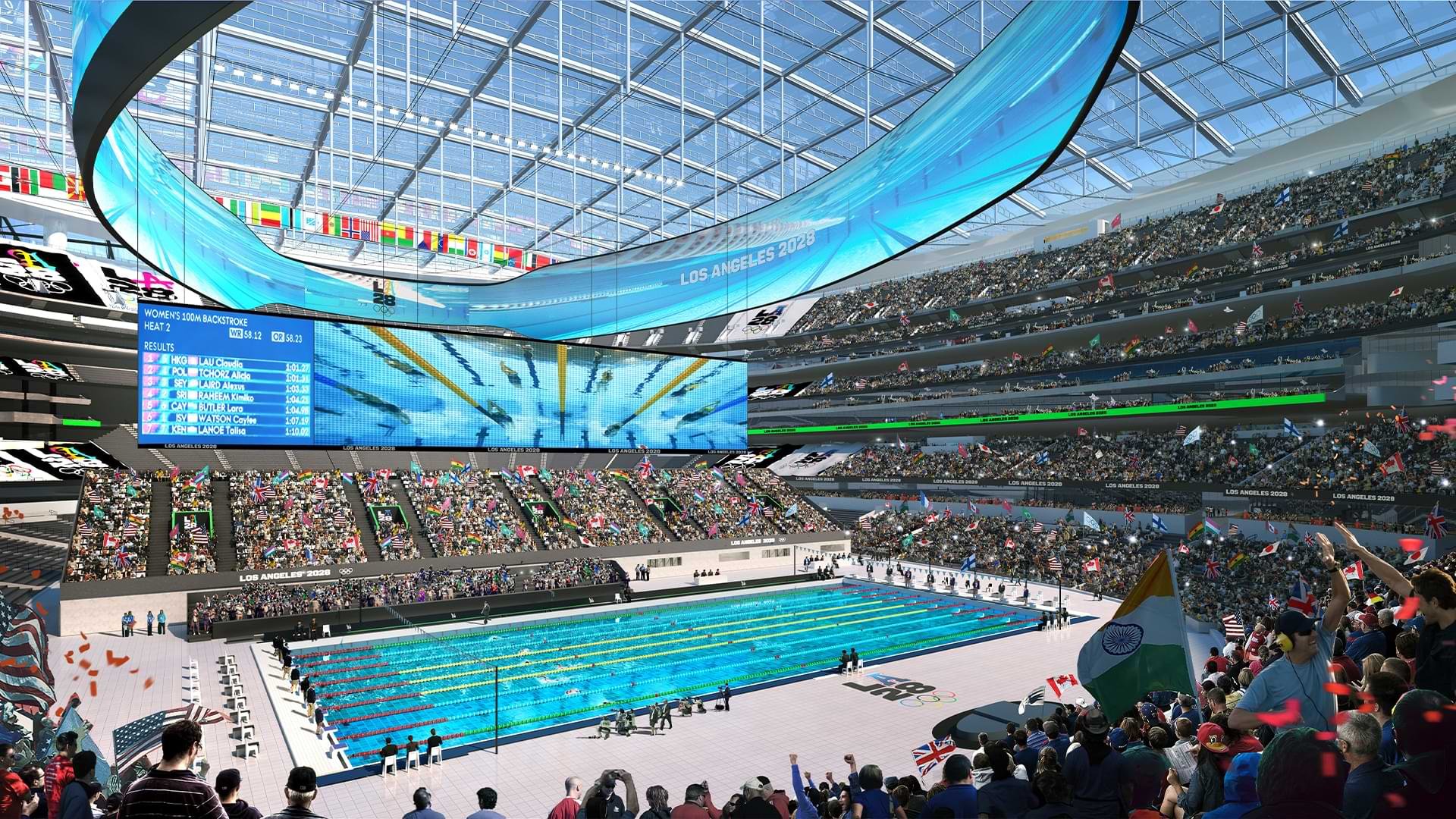
Photo: Drop in pool proposed for SoFi stadium at LA 2028 Olympics
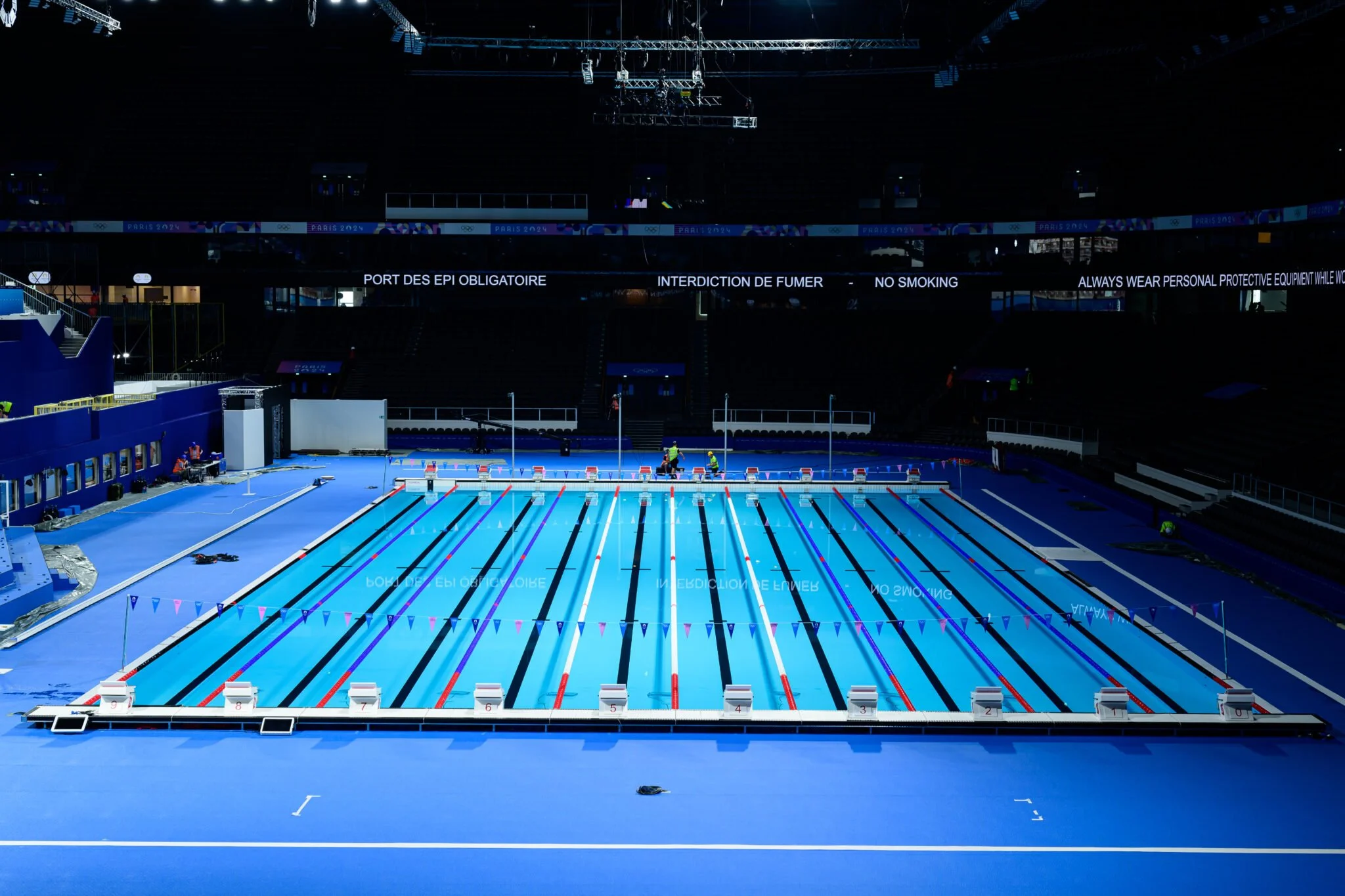
Photo: Drop in pool at Paris 2024 Olympics
Option 2: Upgrade Chandler (Brisbane Aquatic Centre)
This was GIICA's own preferred recommendation.
Chandler already has -
An internationally recognised competition pool
Australia's premier high-performance aquatic precinct
Existing parking
Room for expansion
A long history of hosting major events.
Australian swimmers are familiar with the venue and many regard it as one of the country's fastest pools.
While transport upgrades would still be required, they are arguably simpler than relocating major electricity infrastructure and rebuilding an inner-city precinct from scratch. While Swimming Australia has lobbied for a new legacy venue in the inner-city and argued that Chandler is not sufficient to address current challenges, they have never outlined their justifications for this position*.
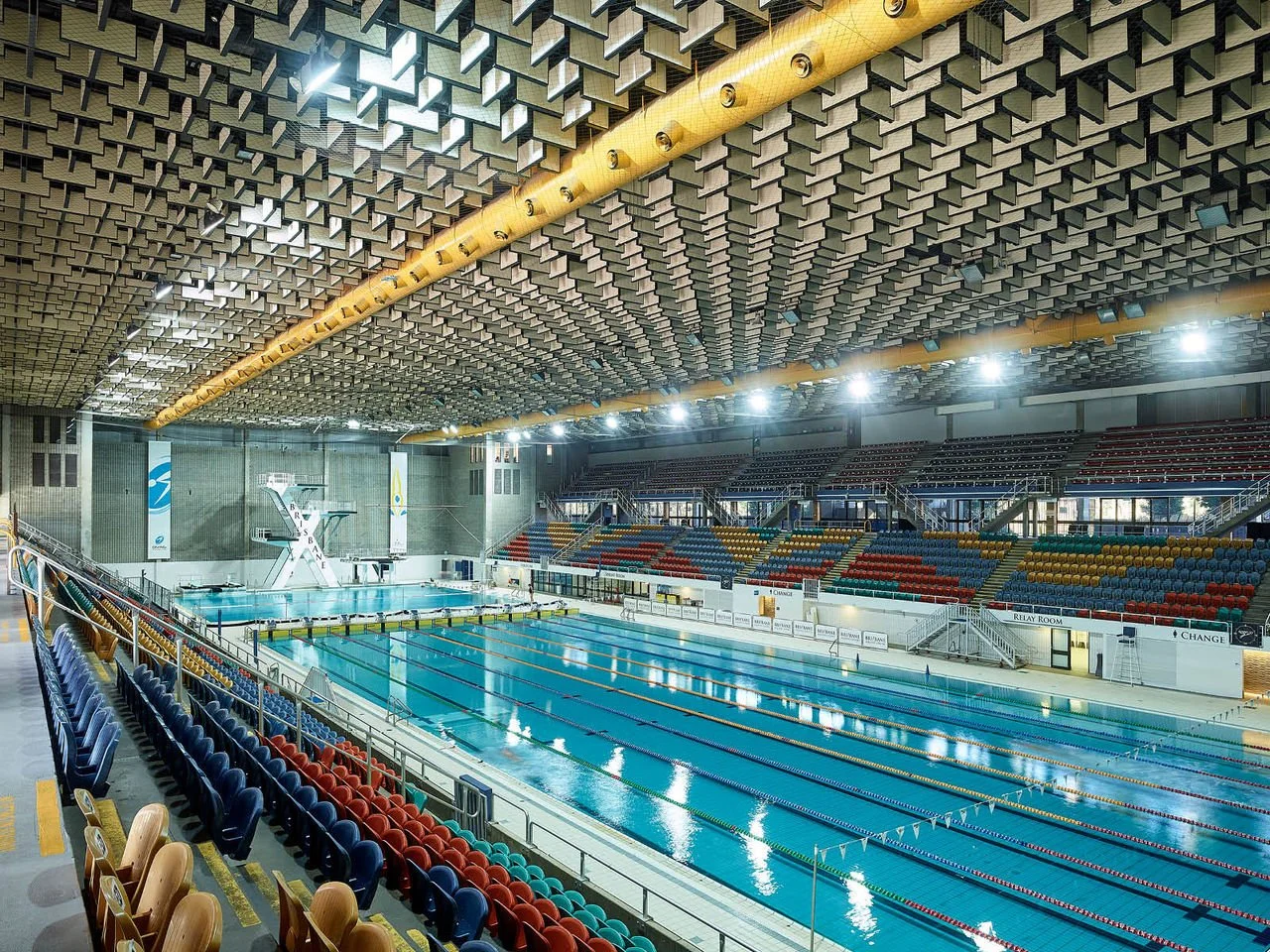
Photo: Brisbane Aquatic Centre at Chandler
Option 3: Gold Coast Aquatic Centre
Another option already exists. The Gold Coast Aquatic Centre successfully hosted the 2018 Commonwealth Games and already meets international competition standards.
Using the venue would -
Cost substantially less than constructing a new aquatic complex
Reduce pressure on Brisbane's already stretched construction workforce
Spread visitors across South East Queensland
Utilise existing accommodation on the Gold Coast
Maximise infrastructure that taxpayers have already funded.
In its current form, the venue cannot host all aquatic event requirements due to the conflict of diving and artistic swimming in the same pool, however this venue could easily be used in conjunction with the Brisbane Aquatic Centre at Chandler and the cost-saving warrants further investigation. Rather than duplicating facilities, Brisbane could build on an internationally proven venue.
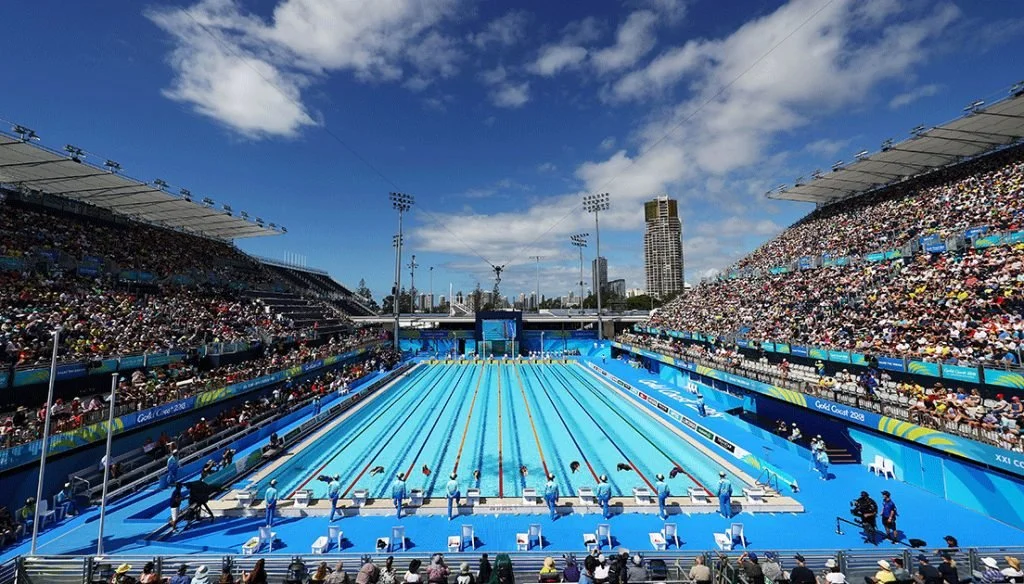
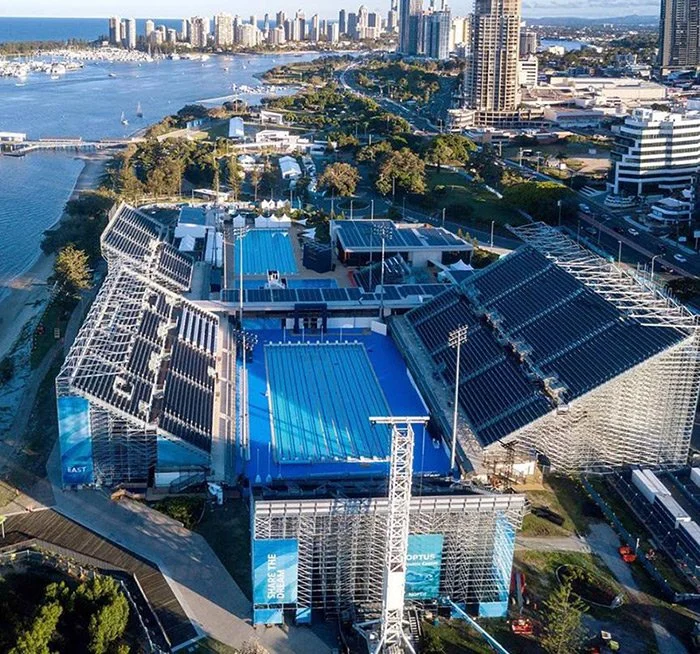
Photos: Gold Coast Aquatic Centre
Olympic Cities Should Build What's Needed, Not What's New
The International Olympic Committee has spent the past decade encouraging host cities to make greater use of existing venues, temporary infrastructure and regional facilities. Brisbane should be embracing that philosophy, not ignoring it.
The proposed National Aquatic Centre would require heritage demolition, impact a place of profound Aboriginal significance, relocate major underground infrastructure, close one of Brisbane's busiest public pools and displace established businesses - all to create a venue that could instead be delivered elsewhere.
Olympic swimming can be held at Chandler. It could be held in a temporary drop-in pool. It could be shared with the Gold Coast. What it doesn't need is the destruction of the Spring Hill side of Victoria Park Barrambin.
The evidence points to a simple conclusion: the proposed National Aquatic Centre is not the right project in the right place.