
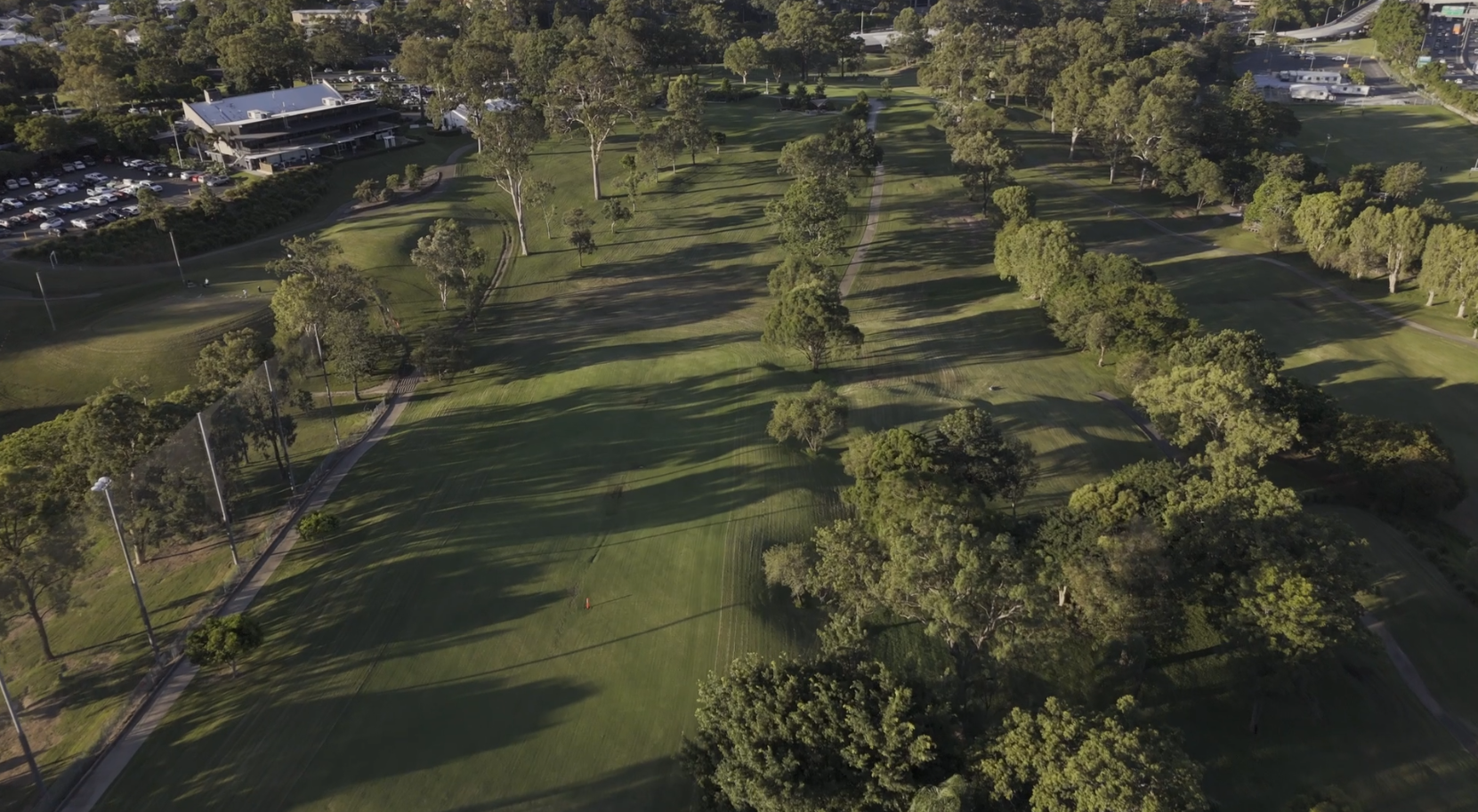
GIICA’s facts aren’t facts. And their experts aren’t experts. Where’s the truth?
On 25 August 2026, GIICA released a video featuring its Cultural Heritage Manager, Dr Kate Quirk, discussing the history of vegetation at Victoria Park Barrambin.
GIICA’s message is clear: the park was once bare, many of its trees were planted and the mature vegetation standing there today is not significant. It is a convenient, selective and misleading story suitable for an organisation that is bulldozing parts of that landscape.
What This Means for You
This is about more than one video. It is about a recurring pattern from the State Government and GIICA to distort the truth and present a convenient narrative that pushes their agenda.
This is about whether Queenslanders can trust the information coming from GIICA who is driving one of the State’s largest and most consequential public projects. The answer is ‘No’ and here’s why.
The ‘Expert’
Dr Kate Quirk has previously spoken about Victoria Park Barrambin. In a 2021 video for Cross River Rail, she described the park as a place of State heritage significance, highlighted rare elements and discussed its First Nations history. In GIICA’s new video, that context disappears. Instead, viewers are given a narrower account: the park was cleared, many of the trees were planted and the mature vegetation standing there today is largely mid-century. Same park. Same heritage specialist. Very different story.
This video is not an independent history lesson. It is content produced by GIICA, who is currently ordering the bulldozing of the heritage-listed park. Dr Quirk is not an arborist, ecologist or botanist. She is paid by GIICA as GIICA’s Cultural Heritage Manager and archaeologist. She is not qualified to make such sweeping, contradictory and frankly erroneous claims about the age and origin of Victoria Park’s trees.
Here are the Facts That Dr Kate Quirk Omits
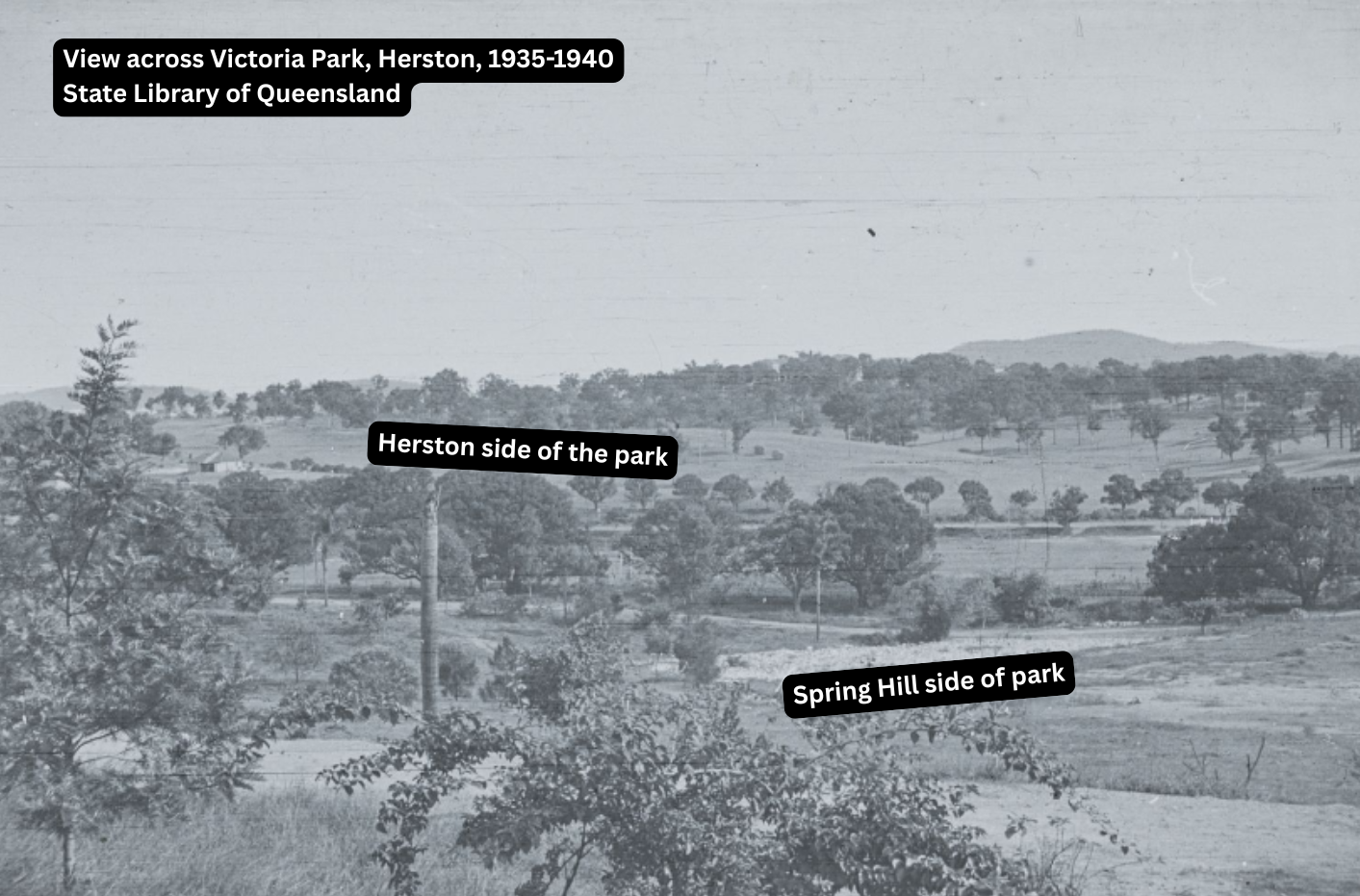
Dr Quirk says that “this entire area was empty” while GIICA shows a photograph of one relatively open section of the park. The image does not show the main stadium area or the parts of Victoria Park where many of the pre-settlement trees stand. Other photographs from the same State Library collection, from the same period, show substantially more vegetation across the park. Those images are not shown. That is not a minor omission. It changes the story.
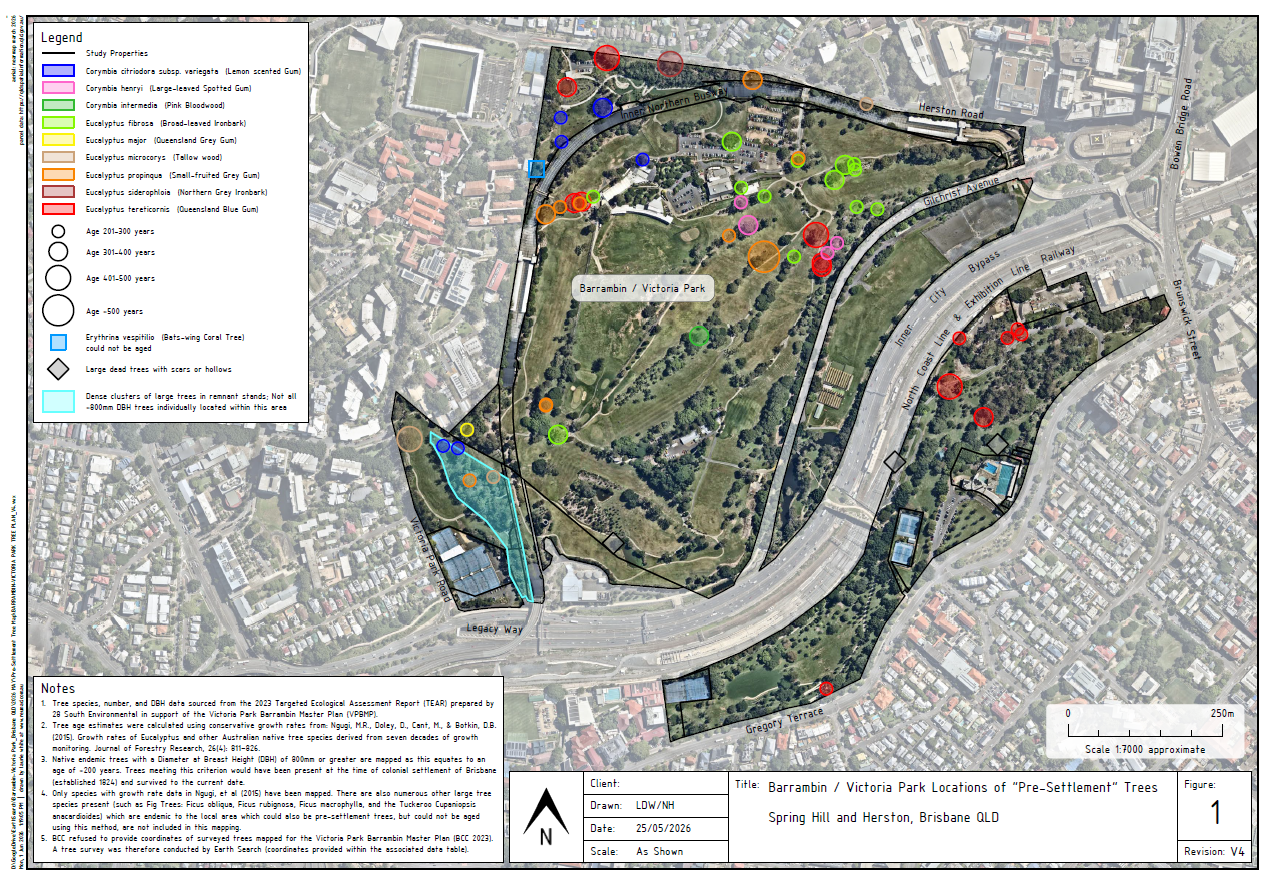
Victoria Park Barrambin was never a simple landscape of “cleared first, planted later.” Historic records identify ironbark, forest oak, spotted gum, bloodwood, stringybark and other native species across the area (Kerkhove 2019). Today, 57 pre-settlement trees more than 200 years old have been identified within the park. Ten of those ancient trees have already been bulldozed.
GIICA’s video leans heavily on the fact that some trees were planted during the twentieth century. And some of them were. What it leaves out is that many of those historic plantings are approaching 100 years old and form part of the heritage landscape in their own right. Some were associated with the former golf course and with major figures in Brisbane’s landscape history, including Harry Moore and Harry Oakman. “Planted” is not a synonym for “insignificant.” We do not dismiss the magnificent trees of New Farm Park or Brisbane’s botanic gardens because someone planted them. Their age, scale, habitat value and place in Brisbane’s history matters.
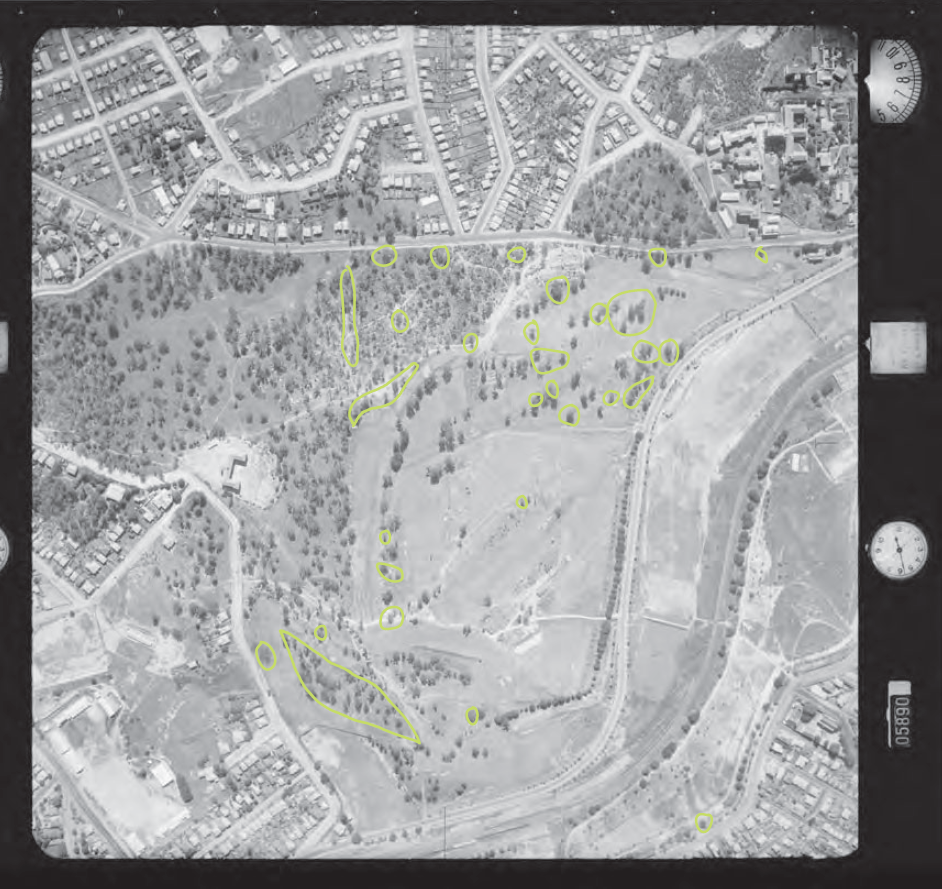
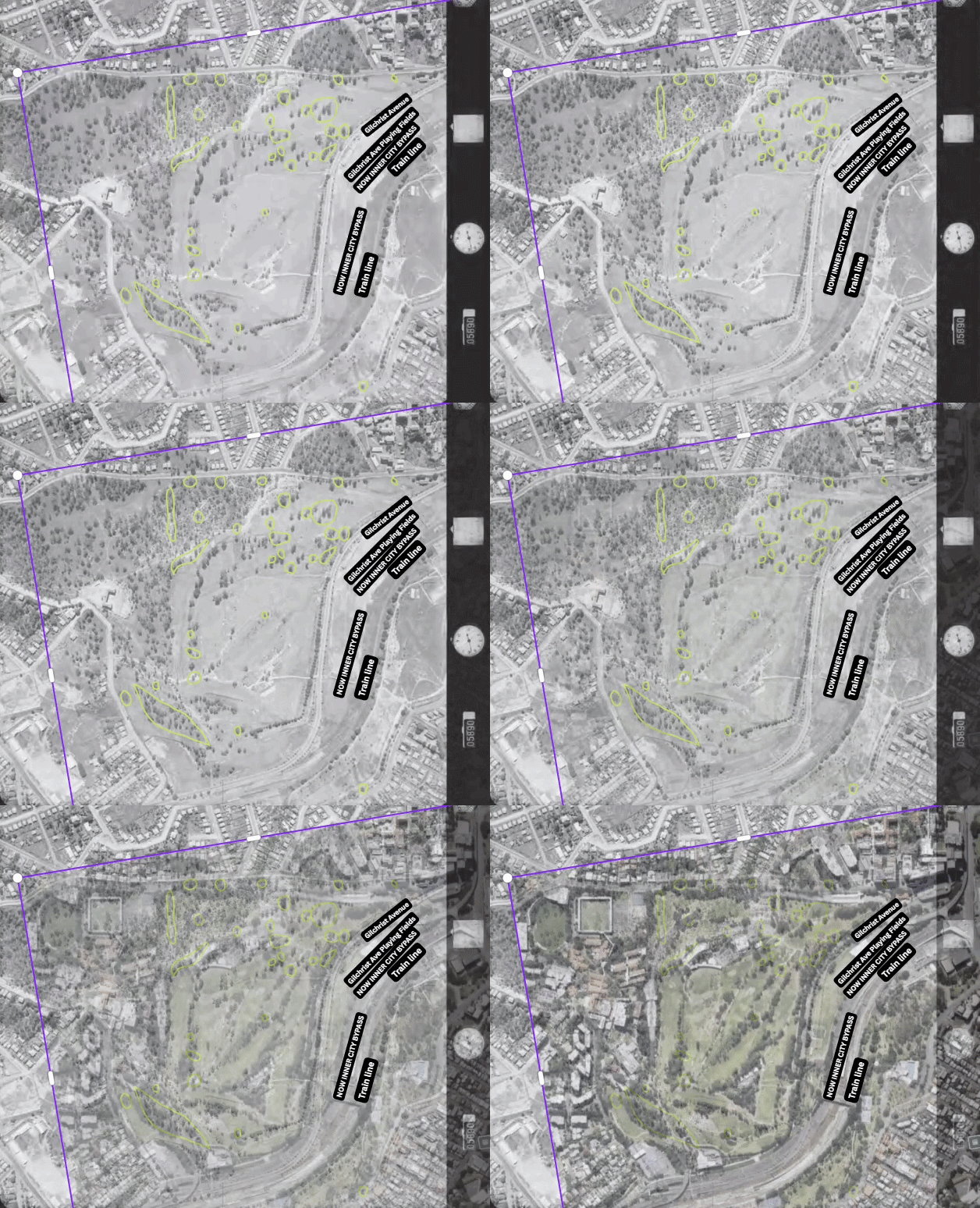
Nor does the 1936 aerial photography show a treeless Victoria Park. When the full park is examined, mature vegetation is visible across both the Herston and Spring Hill portions. The pre-settlement trees can be mapped directly onto that historic imagery to prove that these trees existed as mature flora at this time. In other words, the evidence GIICA uses to imply a largely empty landscape does not support that broader conclusion.
The truth is not complicated: some trees were planted and some were already there when Brisbane was colonised. GIICA’s video collapses that complex history to sell the bulldozing and to sugarcoat the destruction of our history and heritage.
The Real Story: What GIICA Doesn’t Want You to See
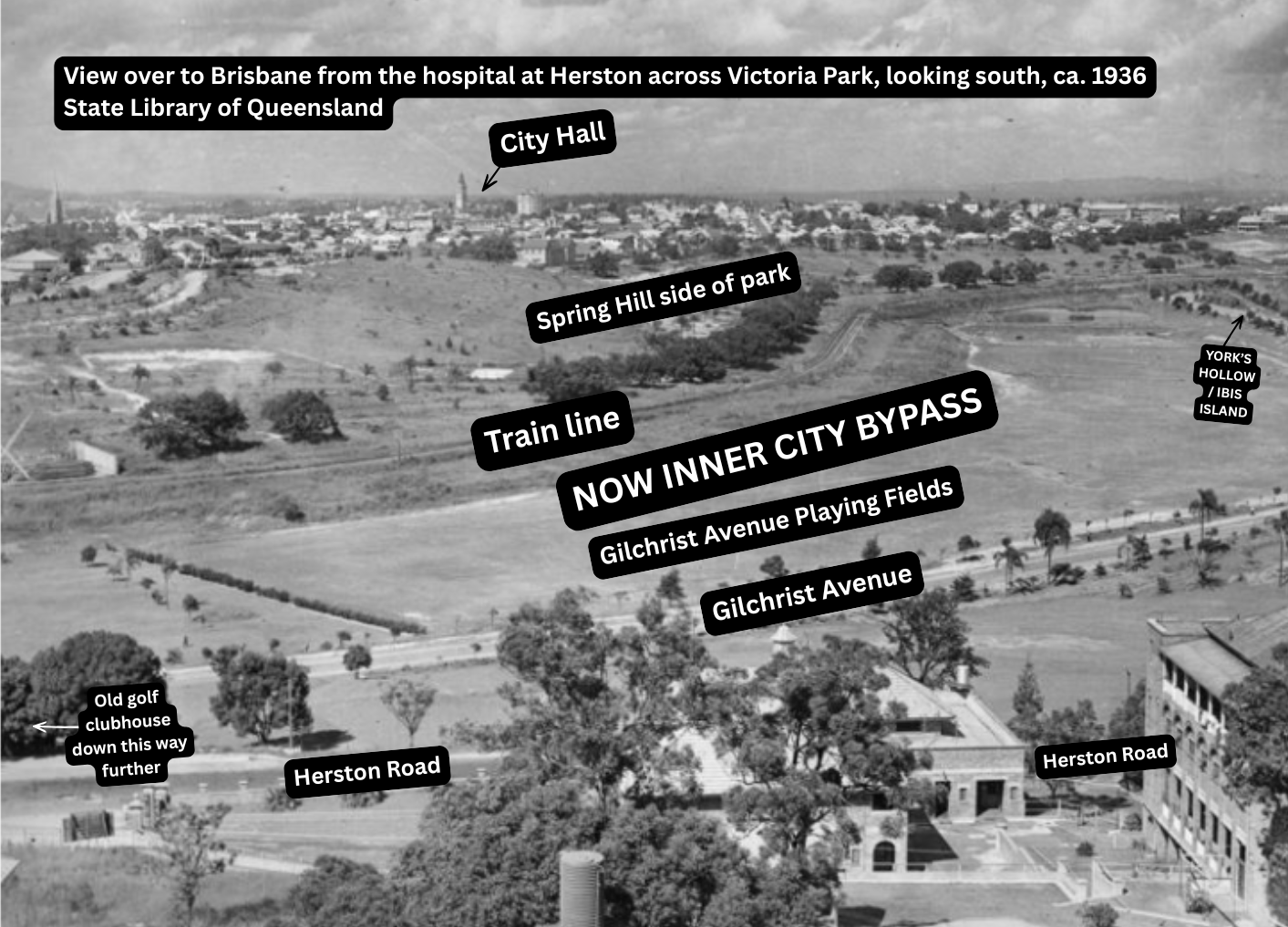
GIICA’s 1936 Aerial Photo, With Context
This 1936 aerial photograph used in GIICA’s video shows one small section of Victoria Park Barrambin, the area which has become train line, the Inner City Bypass and the Gilchrist Avenue playing fields. It does not capture the main stadium area. It does, however, clearly show the mature plantings along the train line on the Spring Hill side of the park (some of which are pre-settlement trees over 200 years old)!
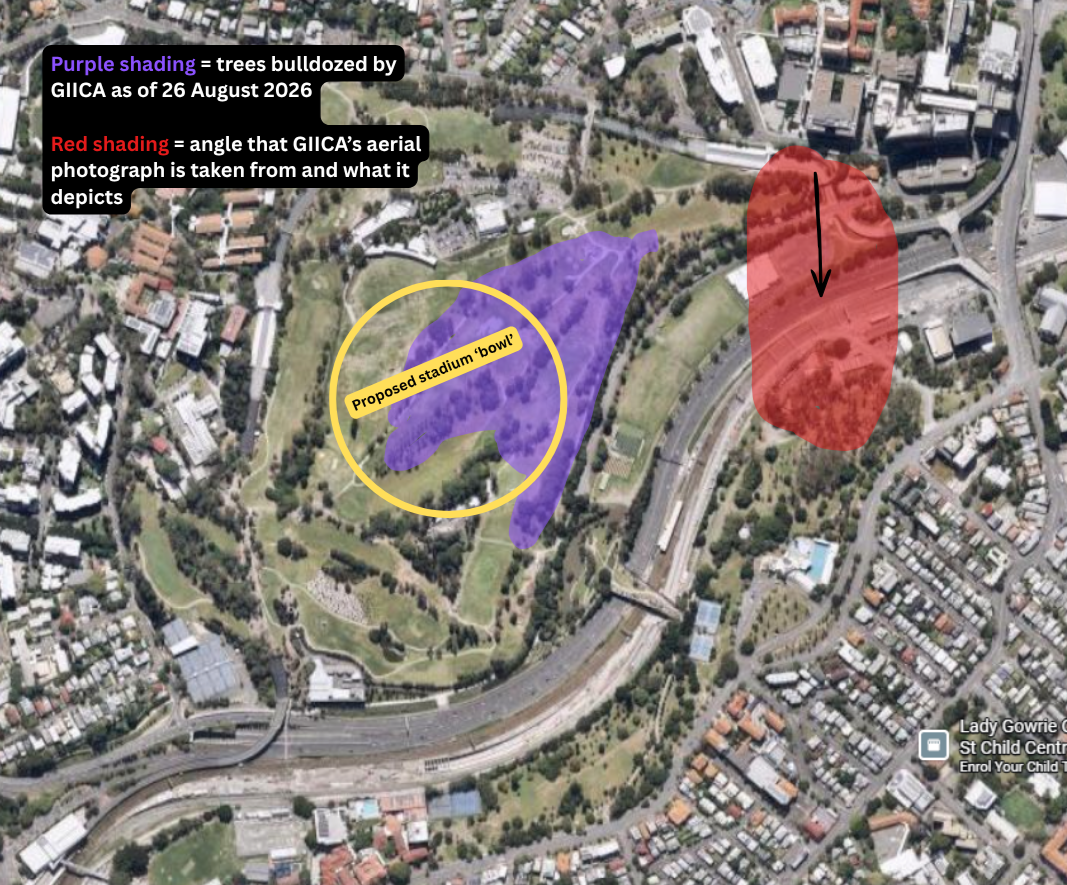
What the 1936 Aerial Photo Shows Compared to the Entire Park
The red shading in the image below shows the area depicted in GIICA’s 1936 aerial photograph. The arrow indicates the direction that the photo is taken from. The photograph does not capture the majority of the park, the proposed stadium bowl or any of the areas which have been bulldozed by GIICA as of August 2026.
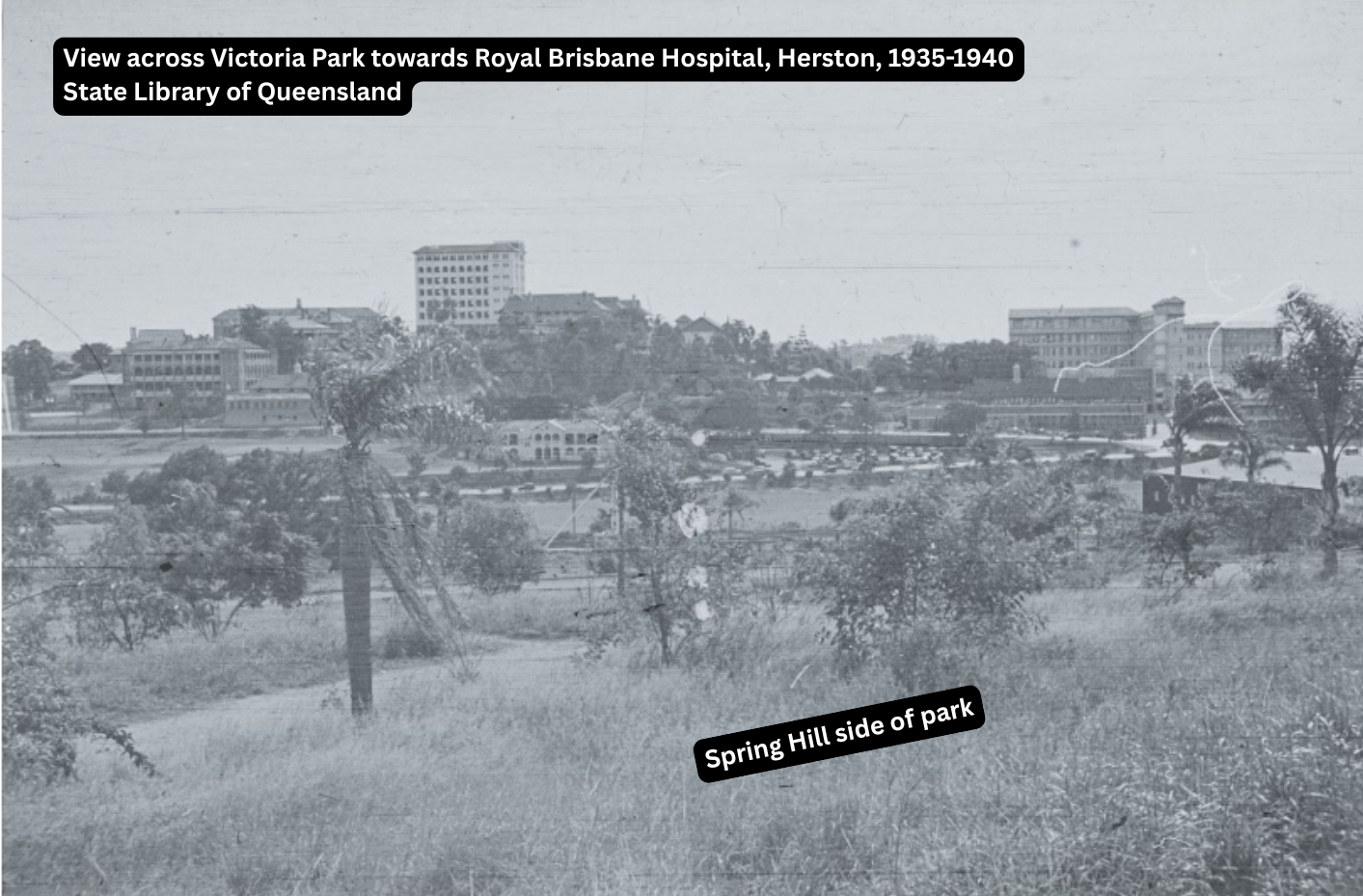
What Other Historic Images Show
Comparing GIICA’s image with other historic photographs of Victoria Park Barrambin from the same period, the difference is clear - change the viewpoint and the park no longer looks treeless.
That is why context matters. GIICA’s photograph shows one relatively open section of a larger landscape. Presented on its own, it creates a misleading impression of the park as a whole. The broader historical record tells a different story.
Locations of the Pre-Settlement Trees
The maps below show Victoria Park Barrambin’s identified pre-settlement trees, more than 200 years old. Ten of these ancient trees have already been bulldozed by the State Government, GIICA and BMD. The coloured circles designate these ancient trees.
Mapping the Pre-Settlement Trees on 1936 Aerial Photo
Here are those same pre-settlement trees mapped onto 1936 aerial photography of Victoria Park Barrambin. The trees were already there as mature flora. Source: QImagery, 2026.
We Deserve Better
GIICA and the State Government are asking the public to trust them with billions of dollars, a State heritage-listed park and the future of a major inner-city landscape.
To make the destruction of this park legal, it has already forced the removal of 15 pieces of State legislation. GIICA has already faced sustained criticism over the lack of consultation, its treatment of First Nations heritage and Traditional Owners, the razing of mature habitat, the neglect of wildlife during clearing and the dubious handling of hazardous waste on site. Opponents to the State Government’s plans have been dismissed and mocked rather than answered on the substance of their concerns.
Against that background, a selective history of Victoria Park’s trees is not harmless PR.
It is GIICA presenting a selective history that is designed to make destruction sound inconsequential.
The people of Queensland deserve better. We deserve complete information, proper expertise and evidence presented in context.